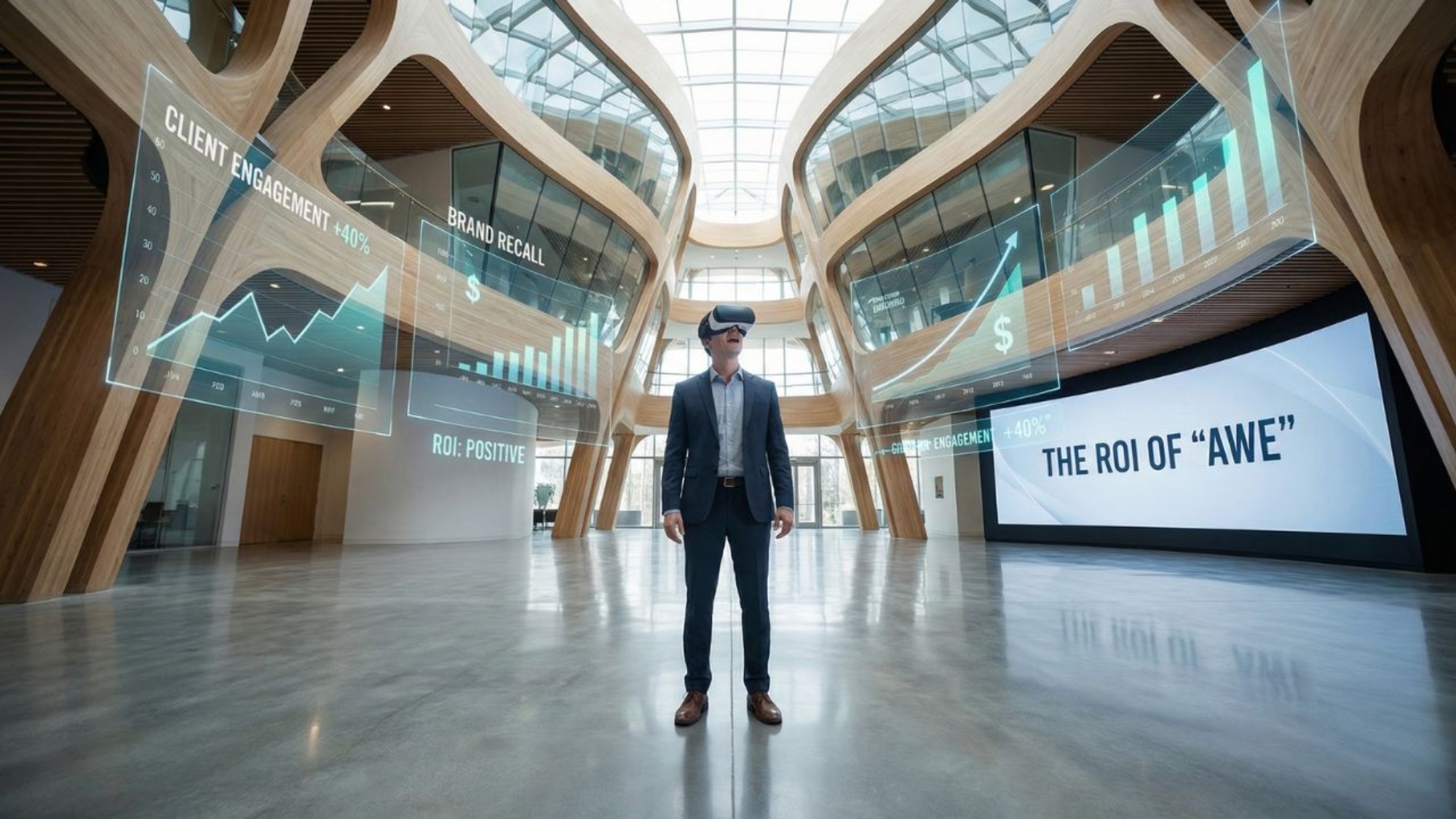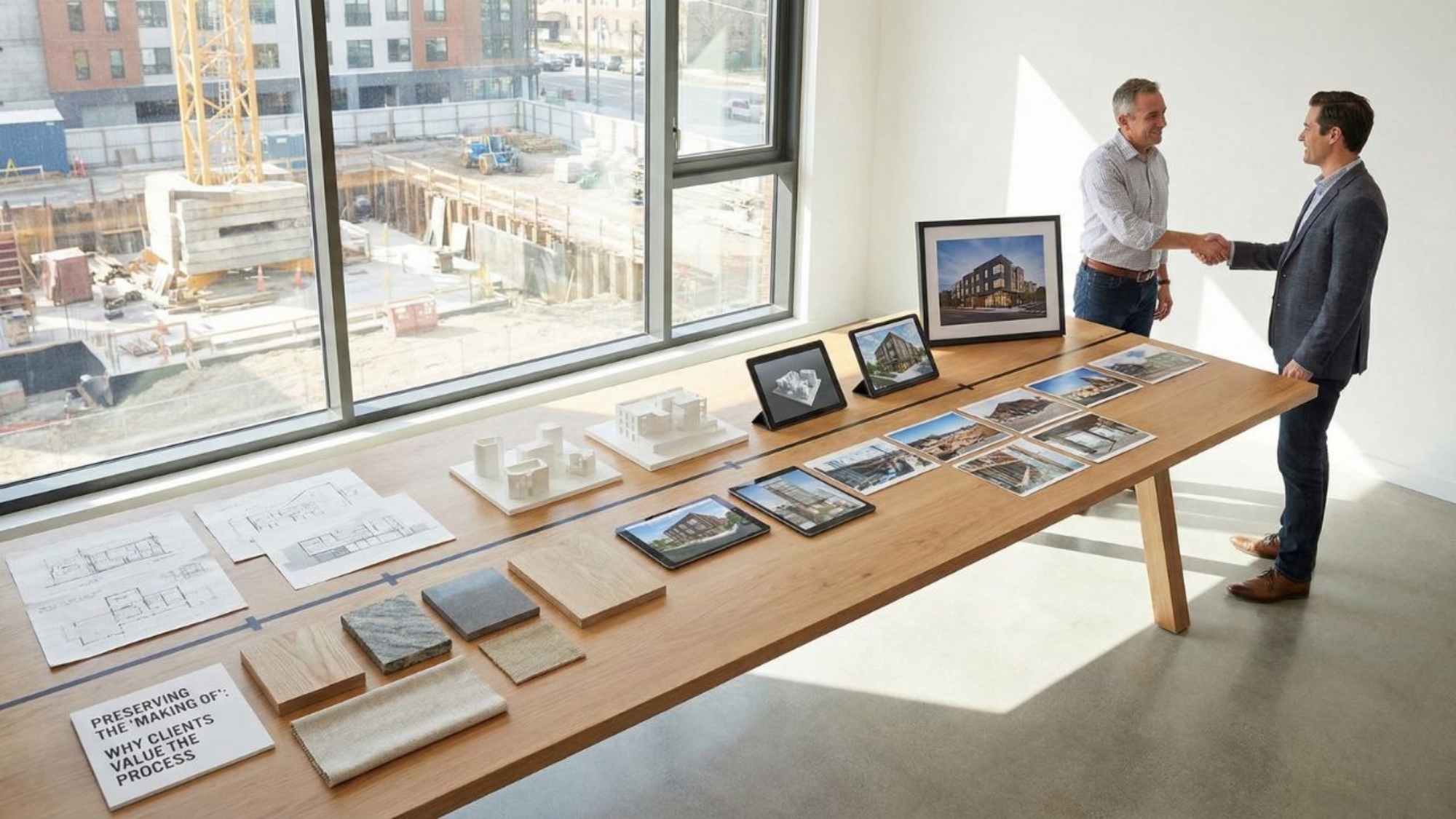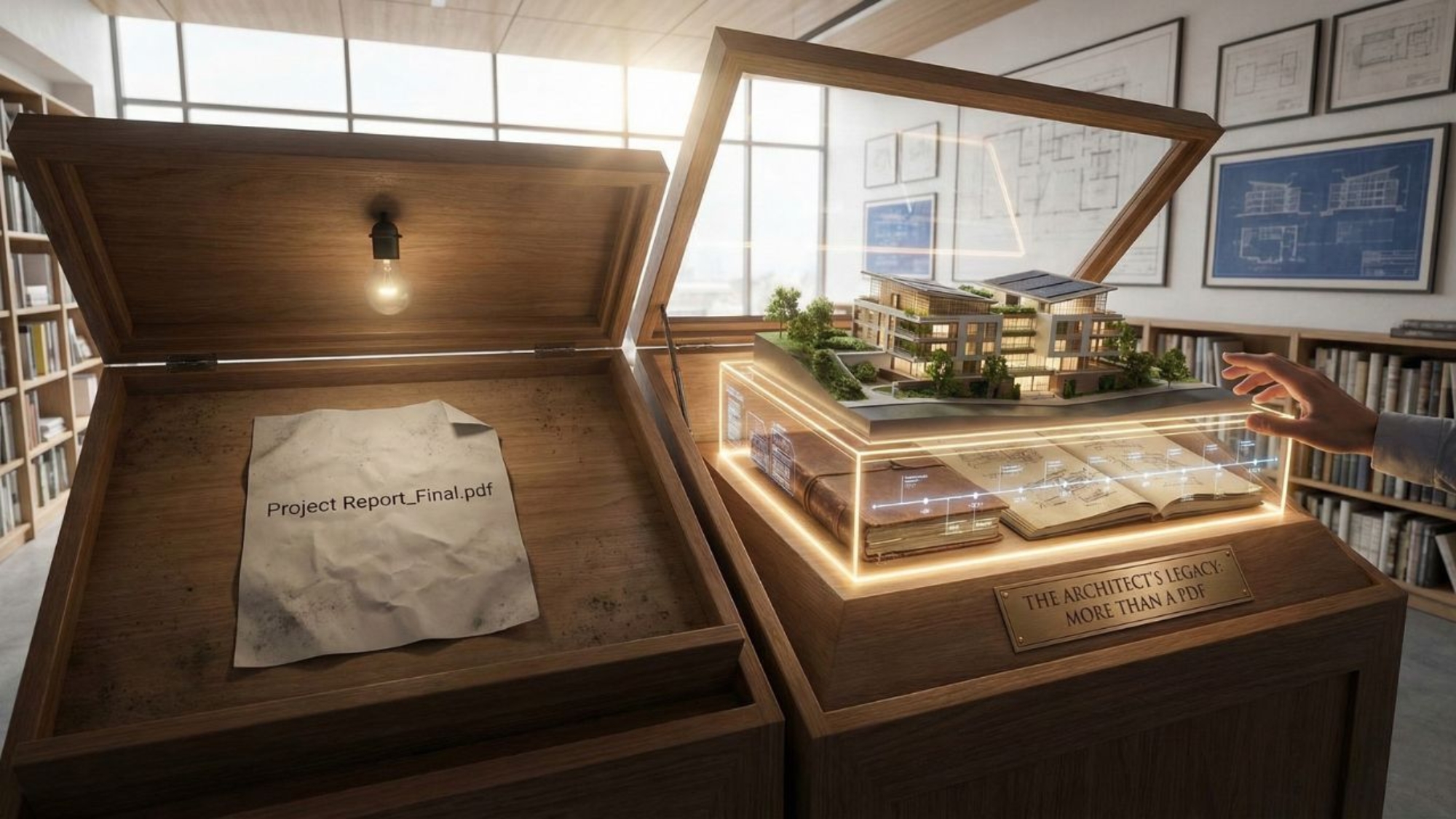
In the hyper-visual landscape of 2026, the architectural world is suffering from “Sculpture Syndrome.” We have become so adept at creating buildings that look like flawless, high-gloss objects—designed for the perfect drone shot or the Instagram grid—that we have inadvertently forgotten the most important participant: the human inhabitant. For the Principals of established artisan firms in London’s heritage districts or Dubai’s desert masterplans, the building is not a static object to be admired from afar. It is a four-dimensional event to be lived from within.
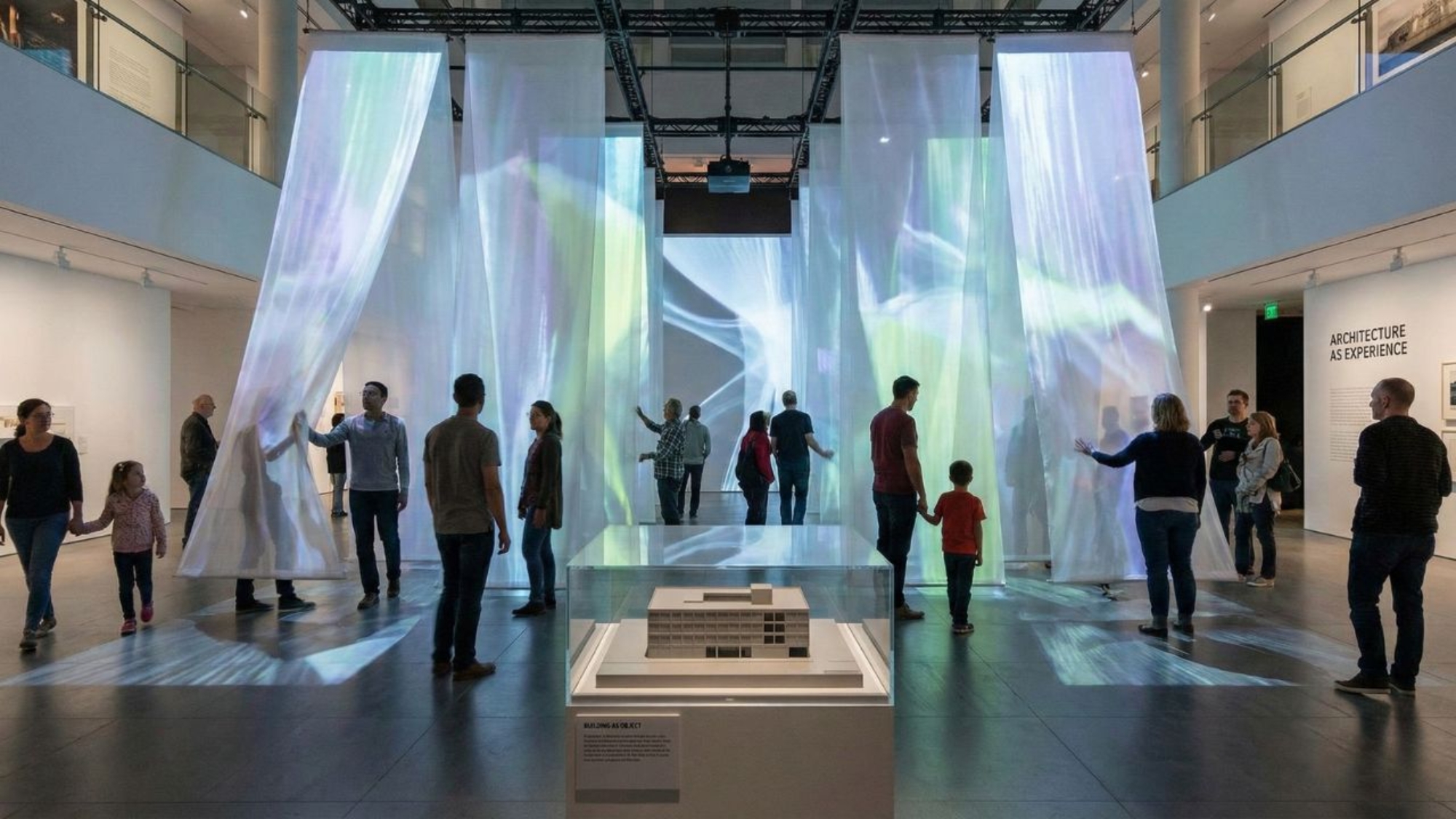
To win the most prestigious commissions today, the “Business of Awe” demands a shift in perspective. We must stop selling geometry and start selling experience. We must move from the “Building as Object” to Architecture as Phenomenon.
The Dilemma: The Sterile Sculpture
The fundamental dilemma for the modern architect is that our tools—the 2D screen, the static render, the floor plan—naturally bias us toward the “object.” We view a project as a series of elevations and massing studies. This creates a “Sensory Gap.”
When a client looks at a brilliant, photorealistic render of a penthouse, they are seeing a sculpture. They are not feeling the “haptic soul” of the room. They don’t perceive the way the temperature drops in a stone-clad vestibule, or how the acoustics shift as they move from a polished concrete foyer into a timber-lined library. If the client cannot perceive the “Spatial Narrative,” they cannot value the intellectual rigor that went into creating it. They are buying an asset; they are not yet experiencing a home.
The Analysis: Reclaiming the Phenomenology of Dwelling
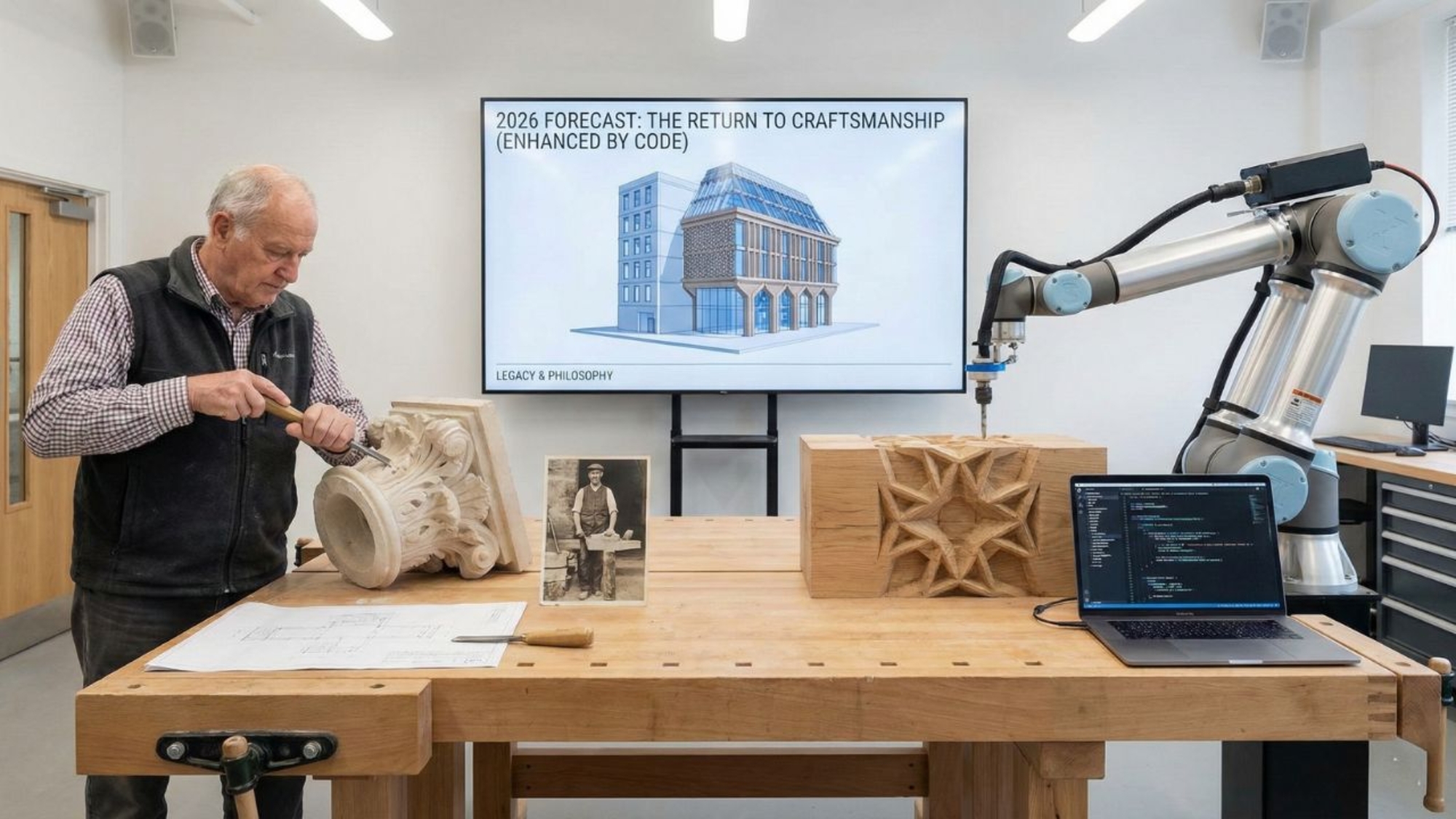
Moving beyond the “object” requires a return to Digital Classicism—using our most advanced tools to restore the ancient, human-first principles of design. It is about capturing the spirit of the space rather than just the form.
- The Choreography of the Senses: Architecture is a multi-sensory experience. In the 2026 market, “Digital Craftsmanship” means simulating the Phenomenology of Space. We use high-fidelity digital twins to show how light behaves, how shadows pace the day, and how the “Reveal” of a view creates a physiological “Awe.”
- Atmospheric Pacing: An object is seen all at once; an experience is revealed over time. We must use immersive storytelling to show the “In-Between” spaces—the transitions and thresholds that define the soul of the building.
- The Human Proxy: By placing the inhabitant’s perspective at the center of the digital journey, we turn the building from a “thing” into a “sanctuary.” We aren’t asking the client to look at the building; we are inviting them to dwell within it before the first stone is laid.
The Strategy: Selling the “Aura,” Not Just the Area
For the Principal, this shift in philosophy is a powerful competitive advantage. It moves the conversation from square footage to Experiential Value.
- The “Contextual Walkthrough”: In your next “Shock & Awe” presentation, don’t lead with the facade. Lead with a 1:1 immersive experience of a singular “Hero Moment”—a breakfast nook at dawn or the entryway at dusk. Prove that you have designed for the life, not just the envelope.
- Narrative over Nomenclature: Replace technical descriptions with “Spatial Narratives.” Don’t describe the marble; describe the “Haptic Feedback” of the stone underfoot and the way it anchors the room’s atmosphere.
- The Digital Stewardship Model: Frame your use of technology as a tool for Certainty. Tell the client: “We aren’t just building an object; we are prototyping an experience to ensure the ‘Awe’ we’ve designed is exactly what you feel on day one.”
The Bizwity Perspective: Bridging the Empathy Gap
At Bizwity, we recognize that for artisan firms, your greatest challenge is conveying the intangible. Your clients are looking for a legacy, but they are trapped in the limitations of 2D media.
We help you bridge this “Empathy Gap” by utilizing high-fidelity real-time storytelling to bring your spatial narratives to life. We don’t just visualize your projects; we curate the “Making Of” and the “Phenomenology” of your vision. In the “Business of Awe,” the firm that can make a client feel the building before it exists is the firm that creates the most enduring connection.