Thumbnails for showcase (29)

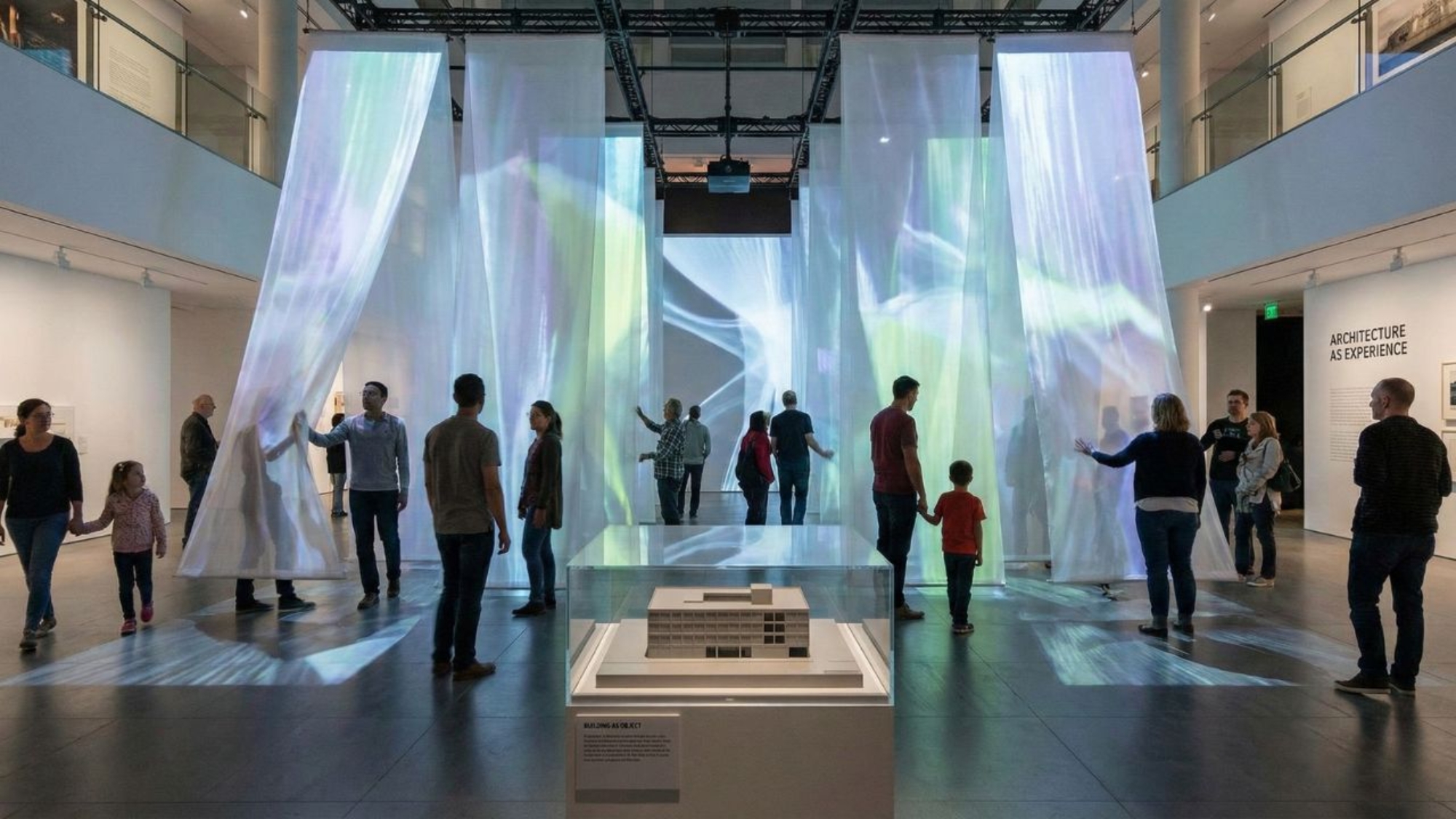
Architecture as Experience: Moving Beyond the “Building as Object”

In the hyper-visual landscape of 2026, the architectural world is suffering from “Sculpture Syndrome.” We have become so adept at creating buildings that look like flawless, high-gloss objects—designed for the perfect drone shot or the Instagram grid—that we have inadvertently forgotten the most important participant: the human inhabitant. For the Principals of established artisan firms in London’s heritage districts or Dubai’s desert masterplans, the building is not a static object to be admired from afar. It is a four-dimensional event to be lived from within.

To win the most prestigious commissions today, the “Business of Awe” demands a shift in perspective. We must stop selling geometry and start selling experience. We must move from the “Building as Object” to Architecture as Phenomenon.


The Dilemma: The Sterile Sculpture

The fundamental dilemma for the modern architect is that our tools—the 2D screen, the static render, the floor plan—naturally bias us toward the “object.” We view a project as a series of elevations and massing studies. This creates a “Sensory Gap.”

When a client looks at a brilliant, photorealistic render of a penthouse, they are seeing a sculpture. They are not feeling the “haptic soul” of the room. They don’t perceive the way the temperature drops in a stone-clad vestibule, or how the acoustics shift as they move from a polished concrete foyer into a timber-lined library. If the client cannot perceive the “Spatial Narrative,” they cannot value the intellectual rigor that went into creating it. They are buying an asset; they are not yet experiencing a home.

The Analysis: Reclaiming the Phenomenology of Dwelling

Moving beyond the “object” requires a return to Digital Classicism—using our most advanced tools to restore the ancient, human-first principles of design. It is about capturing the spirit of the space rather than just the form.

  1. The Choreography of the Senses: Architecture is a multi-sensory experience. In the 2026 market, “Digital Craftsmanship” means simulating the Phenomenology of Space. We use high-fidelity digital twins to show how light behaves, how shadows pace the day, and how the “Reveal” of a view creates a physiological “Awe.”
  2. Atmospheric Pacing: An object is seen all at once; an experience is revealed over time. We must use immersive storytelling to show the “In-Between” spaces—the transitions and thresholds that define the soul of the building.
  3. The Human Proxy: By placing the inhabitant’s perspective at the center of the digital journey, we turn the building from a “thing” into a “sanctuary.” We aren’t asking the client to look at the building; we are inviting them to dwell within it before the first stone is laid.

The Strategy: Selling the “Aura,” Not Just the Area

For the Principal, this shift in philosophy is a powerful competitive advantage. It moves the conversation from square footage to Experiential Value.

  • The “Contextual Walkthrough”: In your next “Shock & Awe” presentation, don’t lead with the facade. Lead with a 1:1 immersive experience of a singular “Hero Moment”—a breakfast nook at dawn or the entryway at dusk. Prove that you have designed for the life, not just the envelope.
  • Narrative over Nomenclature: Replace technical descriptions with “Spatial Narratives.” Don’t describe the marble; describe the “Haptic Feedback” of the stone underfoot and the way it anchors the room’s atmosphere.
  • The Digital Stewardship Model: Frame your use of technology as a tool for Certainty. Tell the client: “We aren’t just building an object; we are prototyping an experience to ensure the ‘Awe’ we’ve designed is exactly what you feel on day one.”

The Bizwity Perspective: Bridging the Empathy Gap

At Bizwity, we recognize that for artisan firms, your greatest challenge is conveying the intangible. Your clients are looking for a legacy, but they are trapped in the limitations of 2D media.

We help you bridge this “Empathy Gap” by utilizing high-fidelity real-time storytelling to bring your spatial narratives to life. We don’t just visualize your projects; we curate the “Making Of” and the “Phenomenology” of your vision. In the “Business of Awe,” the firm that can make a client feel the building before it exists is the firm that creates the most enduring connection.
Thumbnails for showcase (28)

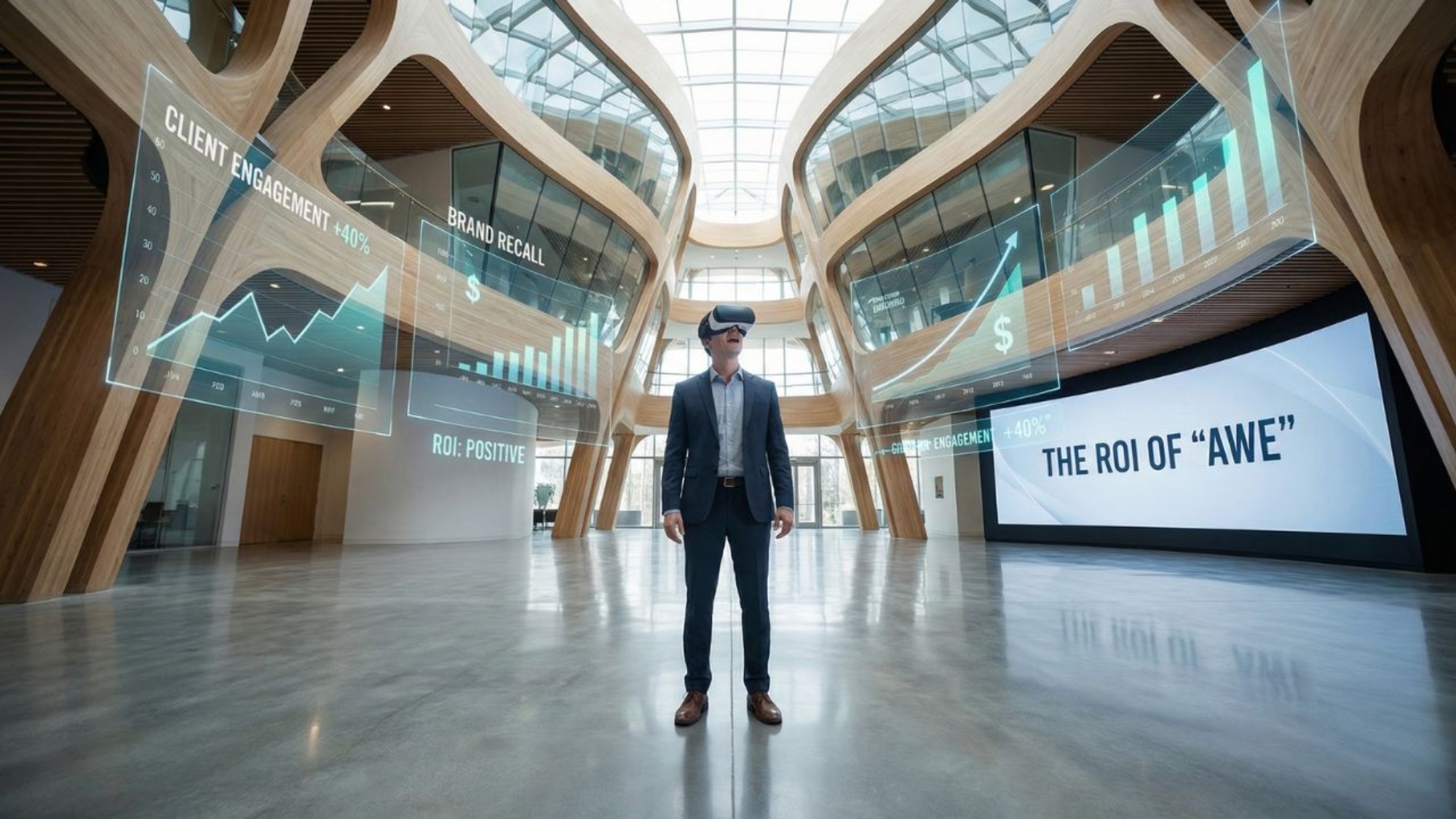
The ROI of “Awe”: Measuring the Impact of Immersive Client Experiences

In the high-stakes boardrooms of Mayfair and the luxury development suites of Dubai, “Awe” is often dismissed as a poetic byproduct—a pleasant but unquantifiable result of good design. For the Principal of an elite firm in 2026, this is a strategic misunderstanding. In the “Business of Awe,” beauty is not a cost; it is a high-performance engine for Return on Investment (ROI).

The dilemma for the modern architect is the “Vague Value” trap. How do you justify the significant investment in high-fidelity digital twins, real-time engines, and immersive storytelling to a client who views every line item through the lens of risk and yield? To win the nine-figure commission, you must prove that “Atmosphere” is the most efficient way to mitigate risk and accelerate capital.


The Analysis: Quantifying the Ineffable

To measure the impact of immersion, we must look beyond the aesthetic and into the operational. When we replace a static PDF with a Digital Twin, we aren’t just changing the presentation; we are changing the physics of the decision-making process.

The ROI of an immersive client experience is found in three measurable pillars:

  1. Decision Velocity: The time between “Concept” and “Approval” is the most expensive phase of any project. Immersive environments eliminate the “Cognitive Gap”—the mental effort required for a client to understand a 2D plan. When a client can dwell in a space digitally, the “Yes” happens in real-time.
  2. The Revision Collapse: Most costly delays are caused by “Post-Facto Regret”—the moment a client sees the physical structure and realizes they misunderstood the proportions. Immersive prototypes allow for Forensic Adjustments at the pixel level, reducing on-site revisions by a staggering margin.
  3. The Premium of Certainty: High-net-worth (HNW) individuals do not buy what they don’t understand. By providing a “Spatial Narrative” they can physically navigate, you move from the role of a vendor to a Digital Steward. This trust allows for a “Prestige Premium” in your fee structure that static portfolios cannot command.

The Metrics of Immersion: A Comparative Analysis

To illustrate the business case to your clients (or your own internal board), consider the shift in project performance:

MetricTraditional Presentation (PDF/Static)Immersive Experience (Digital Twin/VR)
Decision Speed4–8 weeks (Multiple Iterations)1–2 sessions (Real-time Alignment)
Change Order RiskHigh (Visual Ambiguity)Near-Zero (Pre-Visualized Accuracy)
Client Emotional Buy-inSpeculative/IntellectualVisceral/Physiological
Marketing LongevityLimited (Snapshots)Perpetual (Social & Legacy Assets)

The Strategy: Proving the “Return on Emotion” (ROE)

For the Principal, the goal is to frame technology as an Efficiency Tool disguised as an Experience Tool.

  • The “Pre-Occupancy” Audit: Frame your immersive sessions as a “Risk Mitigation Audit.” Tell the client: “We are spending thousands now to save millions in the construction phase by ensuring the atmosphere is correct before a single stone is cut.”
  • The Narrative Lead-Time: Use the digital twin to generate “Atmospheric Content” for the client’s stakeholders or investors early. This builds market momentum long before the ground is broken, proving a financial ROI on the “Making Of.”
  • Documenting the “Foundational Awe”: Use the immersive data to show the specific impact of design on the human experience. If your digital twin can prove that a specific sightline increases the “perceived value” of a room, the design pays for itself.

The Bizwity Perspective: Architecture as a Financial Asset

At Bizwity, we believe that the most expensive design is the one that is misunderstood. Our approach to Digital Classicism is designed to bridge the gap between architectural intuition and financial justification.

We don’t view “Awe” as an intangible; we view it as the ultimate closer. By providing high-fidelity, real-time storytelling tools, we help elite firms prove their value. We turn the “Spatial Narrative” into a strategic advantage, ensuring that every project bears the unmistakable mark of the “Founder’s Touch” while delivering a measurable ROI to the world’s most discerning clients.

Thumbnails for showcase (27)

Exclusivity by Design: The Strategy Behind the “Invite-Only” Portfolio

In the geography of global luxury—from the white-glove residences of Belgravia to the secluded villas of Jumeirah—the most powerful word is not “available.” It is “exclusive.” True luxury is defined by the threshold: the deliberate line between the public bazaar and the private sanctuary.

For the Principal of an elite architectural firm, this creates a profound digital paradox. Most websites are designed for maximum traffic, yet the “Business of Awe” thrives on scarcity. If your most visionary work, your deepest “spatial narratives,” and your refined “digital craftsmanship” are accessible to anyone with a browser, you aren’t a sanctuary; you’re a shop window. In 2026, the most sophisticated firms are reclaiming their aura by adopting the strategy of the Invite-Only Portfolio.


The Dilemma: The Vulnerability of Total Visibility

The traditional architectural website has become a victim of its own accessibility. By showing every angle of every project to the anonymous masses, firms inadvertently commoditize their genius. When a high-net-worth (HNW) client sees your work on the same screen as a mid-market developer, the “Prestige Gap” narrows.

Total visibility also creates a security and privacy risk for the HNW client. They do not want the intimate details of their private library or the “haptic soul” of their master suite to be public data. By keeping your portfolio entirely open, you signal a lack of the very discretion your ideal clients value most. You are trading the “Founder’s Touch” for a high-volume reach that rarely converts at the seven-figure level.

The Analysis: Layered Architecture for the Digital Brand

The “Invite-Only” strategy is the digital application of Digital Classicism. It treats your online presence like a tiered architectural plan: a public “foyer” designed to provoke interest, and a private “inner sanctum” designed to build trust.

  1. The Public Tease (The Foyer): Your public-facing site should not be a gallery; it should be a manifesto. It should showcase your philosophy, your “Intellectual IP,” and perhaps a single, cinematic “vignette” that proves your command of the “phenomenology of space.” It is designed to filter for quality, not quantity.
  2. The Atmospheric Gate: Entry into the deeper portfolio is not a password; it is a relationship. Access is granted as a curated gift—a personal invitation from the Principal. This mimics the feeling of being “vetted” for a private member’s club, instantly increasing the perceived value of the content inside.
  3. The Personalized Showroom: Once “inside,” the content is no longer generic. The client enters a high-fidelity digital twin environment or a private journal curated specifically for their potential project. This is Digital Stewardship at its highest level.

The Strategy: Curating the Velvet Rope

To implement this strategy without alienating prospects, you must focus on the “Aura of Scarcity.”

  • Move to “Micro-Portfolios”: Instead of one massive site, create bespoke, gated digital “Experience Journals” for different sectors (e.g., Heritage London, Modern Dubai).
  • The “Request Access” Ritual: Replace the “View Projects” button with “Request a Private Viewing.” This allows you to vet prospects before they see your most sensitive “spatial narratives.”
  • The Shock & Awe Connection: Use your physical “Shock & Awe” marketing—high-quality printed magazines or personal letters—as the key to the digital gate. A QR code in a physical book that leads to a personalized, private VR walkthrough is the ultimate expression of modern exclusivity.

The Bizwity Perspective: Architecting the Digital Sanctum

At Bizwity, we understand that for elite firms, the digital interface is a high-stakes handshake. We help Principals move away from the “Bazaar” and into the “Sanctum.”

By utilizing gated high-fidelity digital twins and personalized “Immersive Sales Agents,” we ensure that your best work is only seen by those who are prepared to value it. We don’t just help you build a portfolio; we help you architect an experience that honors the “Founder’s Touch.” In the “Business of Awe,” the firm that knows how to close the door is the one that everyone is dying to get into.

Thumbnails for showcase (26)

Preserving the “Making of”: Why Clients Value the Process as Much as the Result

In the world of ultra-high-net-worth (UHNW) commissions, a finished building is rarely just a physical asset; it is a trophy of intellectual and creative endurance. For the clients of elite firms in Mayfair, the Cotswolds, or Dubai’s Jumeirah, the luxury isn’t found only in the final grain of the marble, but in the provenance of the idea.

They want to know how the “spatial narrative” was born. They want to see the friction, the iterations, and the “digital craftsmanship” that led to the “foundational awe” of the final reveal. In 2026, the firms that secure the most prestigious legacies are those that understand that the “Making of” is an asset as valuable as the architecture itself.


The Dilemma: The “Black Box” of Design

Too often, the architectural process is treated as a “black box.” The client sees the initial visionary sketch and the final, polished reality, but the middle—the months of forensic material testing, the shadow studies, and the structural debates—is lost to the archives.

When you hide the process, you inadvertently commoditize the result. If a client doesn’t see the rigor, they struggle to justify the premium. They are left with a finished product, but they are robbed of the narrative of creation. In an era where AI can generate a “perfect” image in seconds, the human effort, the “Founder’s Touch,” and the messy, brilliant evolution of a project are what provide the true “Return on Emotion.”

The Analysis: Process as the Ultimate Proof of Craft

In the philosophy of Digital Classicism, the process is not a byproduct; it is the Digital Provenance. It is the evidence of “haptic soul” in a digital world.

  • The Psychological Anchor: Seeing the evolution of a design allows the client to build a psychological bond with the building before the first stone is laid. It transforms them from a “buyer” into a “patron.”
  • The Validation of Fees: When a client sees the level of “digital stewardship” required to simulate the raking light of a specific courtyard across four seasons, the high-end fee ceases to be a number and becomes a reflection of labor and expertise.
  • Legacy Documentation: A building will change over time, but the “making of” is a fixed point in history. Capturing the process provides the client with a legacy document they can share with their peers and pass down through generations.

The Strategy: Architecting the “Process Journal”

To turn your process into a sales and legacy tool, you must move beyond the casual site photo. You must curate the “making of” with the same rigor as the “final reveal.”

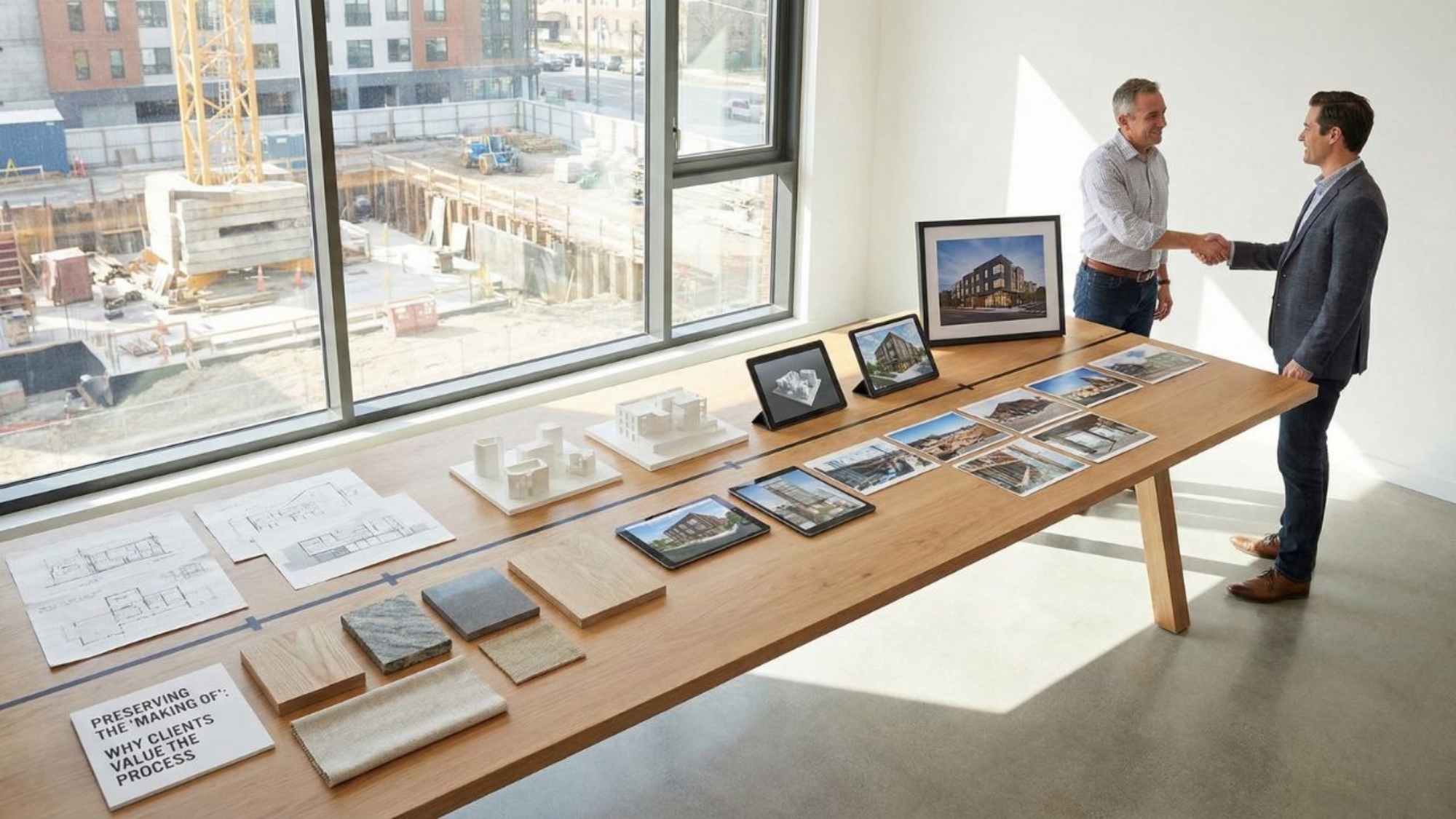
  1. The Iterative Archive: Use your Digital Twin not just for the final presentation, but as a time-capsule. Archive the key “forks in the road”—the material choices that were rejected and why. This demonstrates a level of forensic care that is the hallmark of a master.
  2. Cinematic Site Diaries: Replace the grainy phone photo with “Lifestyle Visualist” captures. Document the master mason at work or the Principal sketching in a raw concrete shell. These are the “human-first” moments that anchor the technology.
  3. The “Behind the Scenes” Premiere: Treat your milestone reviews as “Making Of” screenings. Use immersive technology to show the client the why behind a complex junction or a lighting decision. Let them stand in the digital void before the solids are finalized.

The Bizwity Perspective: Preserving the Soul of Craft

At Bizwity, we believe that the most powerful marketing is transparency. We help elite firms utilize AI and immersive technology to capture the “haptic soul” of their work as it happens.

Through our Digital Stewardship framework, we ensure that your intellectual IP—the sketches, the VR walkthroughs, and the material trials—are preserved as a high-fidelity “Digital Journal.” We turn your process into an “Immersive Narrative” that builds trust and reinforces your authority. We don’t just help you deliver a building; we help you curate a legend.

Thumbnails for showcase (25)

The Architect’s Legacy: Why Your Best Work Deserves More Than a PDF

Every Principal of an elite firm in London or Dubai knows the weight of a legacy. You spend years—sometimes decades—perfecting a singular “spatial narrative.” You obsess over the haptic soul of a building: the way a heavy brass door handles the humidity of the Gulf, or how the grey London light softens against a hand-plastered wall.

Then comes the presentation.

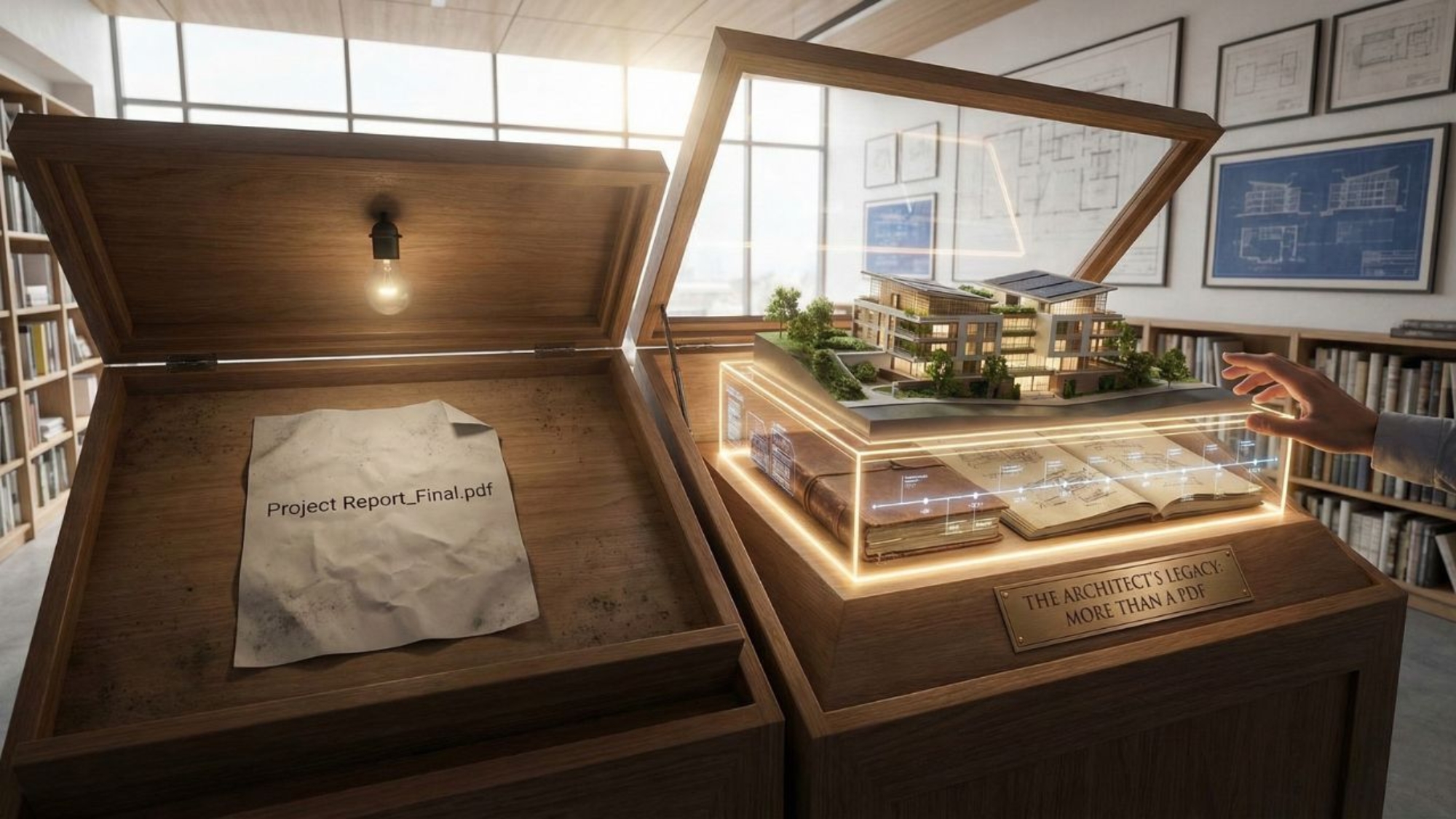
You take that multi-dimensional masterpiece and you flatten it. You crush the atmosphere, the scale, and the intent into a 2D, linear PDF. You ask a high-net-worth client to do the heavy intellectual lifting of “imagining” the awe. In the Business of Awe, a PDF isn’t a portfolio; it’s a digital mausoleum. To secure a legacy in 2026, your best work requires a medium that lives as vibrantly as the architecture itself.


The Dilemma: The “Static” Glass Ceiling

The traditional architectural presentation has reached its expiration date. A PDF is a broadcast; it is a one-way lecture that treats a building as a static object. But architecture is a physiological event. It is a sequence of reveals, transitions, and sensory triggers.

When you send a static deck, you lose the phenomenology of space. You lose the “In-Between” moments—the silent hallways and the transition from light to shadow—that actually define luxury. This “Static Ceiling” devalues your expertise, reducing your vision to a commodity that can be skimmed in thirty seconds. For the elite client, if they can’t feel the soul of the work, they will inevitably start to negotiate the price of the square footage.

The Analysis: From Documentation to Digital Stewardship

Legacy isn’t just about what you built; it’s about how your vision is remembered and maintained. In the era of Digital Classicism, we are moving from “Digital Documentation” to Digital Stewardship.

  1. The Living Archive: A PDF is a snapshot of a moment. A high-fidelity Digital Twin is a living record of your intent. It allows a client to experience the “spatial narrative” exactly as you choreographed it, with real-time lighting and material interaction that honors your “digital craftsmanship.”
  2. The Authority of Immersion: When you move beyond the goggle and into Ambient VR or interactive storytelling, you reclaim your role as the visionary. You are no longer defending a slide; you are guiding a journey.
  3. Intellectual IP Protection: Your best details—the specific way you join stone to timber—are your intellectual property. A PDF makes them easy to copy and hard to appreciate. An immersive digital journal preserves the logic behind the detail, proving the “Founder’s Touch” is irreplaceable.

The Strategy: Architecting Your Digital Legacy

To move your firm into the next tier of prestige, you must treat your digital presence with the same rigor as your physical site.

  • Kill the “Standard” Portfolio: Replace your generic “Projects” page with a curated “Experience Journal.” Lead with a single, immersive walkthrough that forces the viewer to slow down and experience the “Reveal.”
  • Productize the Handover: Don’t just give the client the keys and a PDF manual. Provide a “Digital Legacy Pack”—a personalized, interactive digital twin that acts as a 24/7 concierge for the building’s soul. This ensures your design integrity is maintained long after you leave the site.
  • Master the “Interactive Pitch”: In 2026, the winning pitch is a live simulation. Use real-time storytelling to answer a client’s question about a sightline or a material swap instantly. This demonstrates absolute command and removes the friction of doubt.

The Bizwity Perspective: Beyond the Paper Trail

At Bizwity, we recognize that a Principal’s legacy is too valuable to be trapped in a document. Our mission is to liberate the “haptic soul” of your work.

We help elite firms transition from the “Static PDF” to Immersive Storytelling. By utilizing high-fidelity real-time engines and “Digital Classicism,” we ensure that your best work doesn’t just sit in a folder—it performs. We turn your portfolio into a “Digital Sales Agent” that builds authority and closes the gap between your vision and the client’s awe. Your best work deserves to be felt, not just seen.

Thumbnails for showcase (24)

2026 Forecast: The Return to Craftsmanship (Enhanced by Code)

As we enter 2026, the architectural pendulum is swinging back from the hyper-efficient, “cookie-cutter” minimalism of the last decade toward a visceral, haptic renaissance. For the Principals of elite firms in London, Dubai, and Singapore, the forecast is clear: high-net-worth clients are no longer satisfied with “luxury” as a label. They are demanding a return to True Craftsmanship—the kind that possesses a soul, a history, and an unmistakable human touch.

However, this is not a retreat into the past. We are witnessing the rise of a new paradigm: Digital Classicism. It is a movement where the ancient virtues of the artisan are not replaced by code, but rather amplified, protected, and perfected by it.


The Dilemma: The Crisis of the “Soul-less” Surface

In recent years, “digital” has often been synonymous with “clinical.” We have used technology to flatten our processes, resulting in spaces that look flawless in a render but feel emotionally inert in reality. This “Sensory Poverty” has led to a market fatigue where the sophisticated client can spot a “standard” digital output from a mile away.

The dilemma for the modern firm is how to scale excellence without losing the “Founder’s Touch”—the granular obsession with detail that defines a legacy project. To survive 2026, firms must move beyond the “efficiency of the machine” and embrace the “craftsmanship of the algorithm.”


The Analysis: The Three Pillars of 2026 Craftsmanship

The forecast for this year rests on three technological-philosophical pillars:

  1. Computational Articulation: We are seeing a move away from generic parametricism toward “Computational Craft.” This involves using AI and custom scripts not to design the building, but to articulate the material joints, the fluting of the stone, and the “In-Between” spaces with a level of forensic detail that would be impossible by hand alone.
  2. The Haptic Twin: The “Digital Twin” has evolved. In 2026, it is no longer just a structural map; it is a sensory prototype. Using real-time engines like Unreal Engine 5.5, we can now simulate the “phenomenology of light” and the exact tactile resistance of a material, allowing the architect to “feel” the craftsmanship before a single stone is cut.
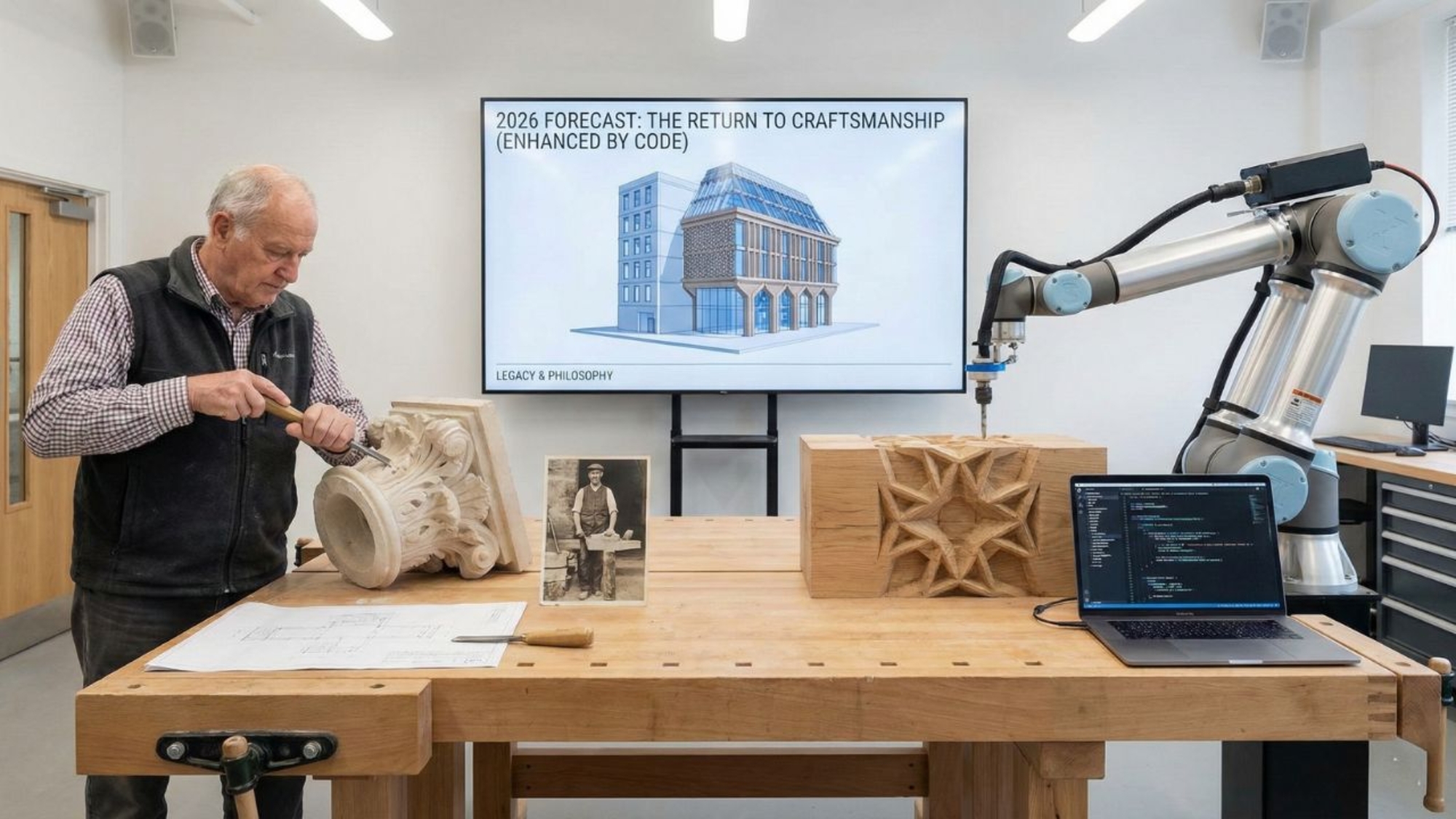
  3. The Hybrid Artisan: The master mason of 2026 works with a chisel in one hand and a Mixed Reality headset in the other. Code is being used to guide the human hand, ensuring that “Digital Classicism” maintains its material honesty while achieving a geometric complexity that honors the site’s unique “Spatial Narrative.”

The Bizwity Perspective: Engineering the “Founder’s Touch”

At Bizwity, we believe that technology’s greatest purpose is to make the architect’s intuition visible. Our role in the 2026 landscape is to act as the “Digital Stewardship” layer for elite firms.

We help you turn your “Intellectual IP”—your unique design DNA—into high-fidelity digital assets that can be scaled without losing their “haptic soul.” By utilizing our Lifestyle Visualist approach, we ensure that your digital content doesn’t just show a building; it premieres a vision. We bridge the gap between the raw power of code and the timeless elegance of craft, ensuring that your firm remains the inevitable choice for clients who demand nothing less than “Foundational Awe.”

Thumbnails for showcase (23)

Texture, Tension, and Time: The Three Pillars of Exceptional Interior Photography

In the rarefied world of high-end design, a photograph is never just a document. It is a portal. For the Principal of a firm in Mayfair or Dubai, the camera is the primary translator of the “haptic soul” of a project. Yet, many firms fall into the trap of “clinical perfection”—images that are sharp and bright, but emotionally sterile.

To capture the Business of Awe, interior photography must move beyond the static record and embrace Digital Classicism. It requires a mastery of three invisible elements that define how a human brain perceives luxury: Texture, Tension, and Time.


1. Texture: The Haptic Soul

Architecture is experienced through the skin. The primary goal of exceptional photography is to trigger a tactile memory in the viewer.

  • The Macro Narrative: It’s not just about the room; it’s about the raking light that reveals the microscopic grain of hand-planed oak or the cold, crystalline depth of a Tinos marble slab.
  • Material Honesty: In the digital age, we use photography to prove that the “Digital Craftsmanship” promised in the renders has been realized in the physical world. If the viewer can’t “feel” the fabric of the sofa through the screen, the image has failed its sensory duty.

2. Tension: The Spatial Narrative

A great interior photograph should feel like a single frame from a cinematic masterpiece. It should contain narrative friction.

  • The Art of the “In-Between”: Instead of perfectly centered, wide-angle shots, exceptional photography focuses on thresholds and sightlines. It teases the “Reveal.”
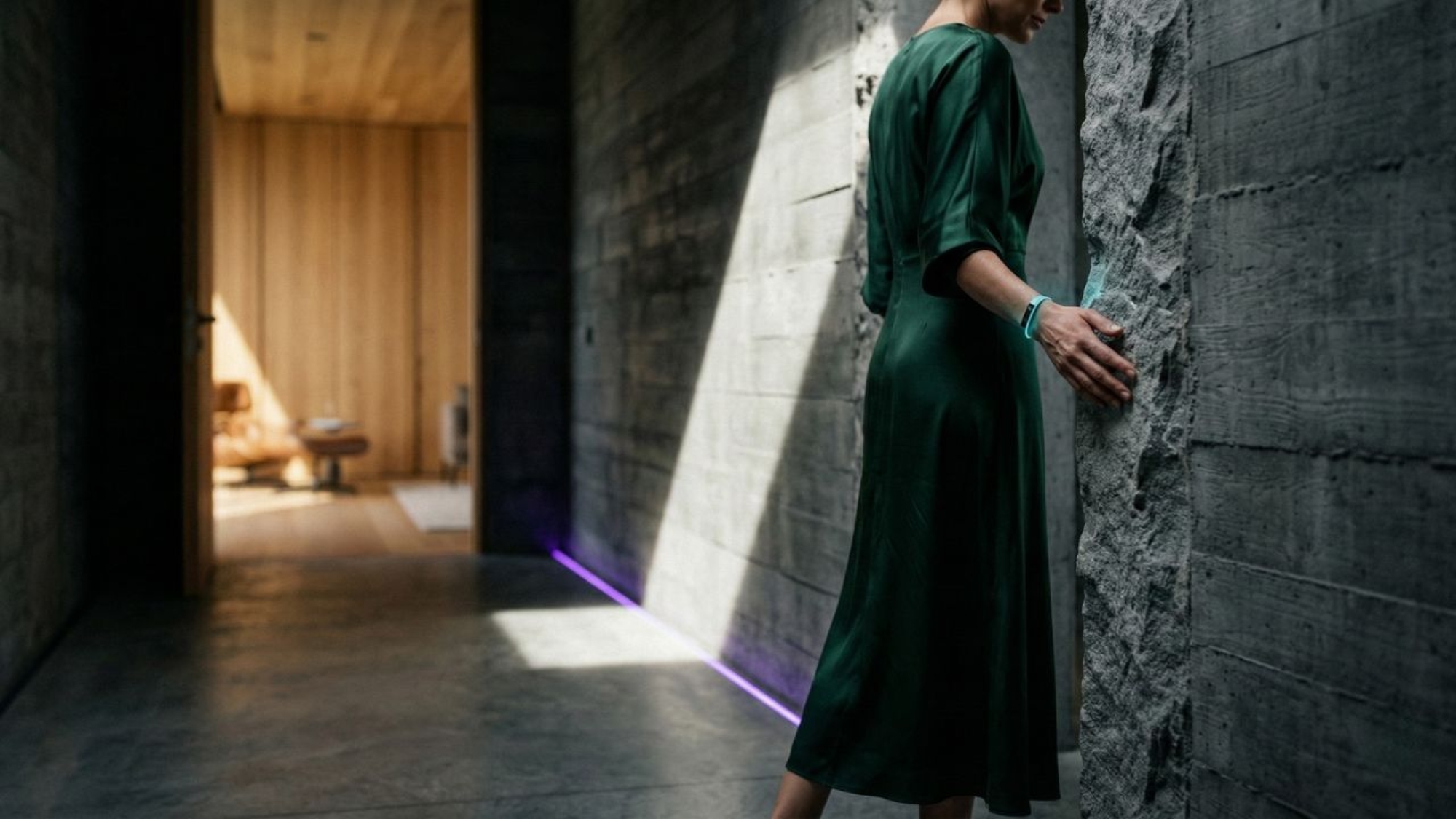
  • Human Presence: By including a “Human Element”—a blurred figure in motion or a hand resting on a textured surface—we create a sense of scale and life. It transforms a gallery into a home. This is the “Sherlock Holmes” method of photography: providing enough detail for the viewer to reconstruct the life lived within the walls.

3. Time: The Circadian Rhythm

Light is not a static utility; it is a clock. To capture the atmosphere of a space, the photographer must be a master of the Digital Shadow.

  • The 4:00 PM Shadow: Every space has a “hero hour.” Exceptional photography captures the specific, moody chiaroscuro of a room at dusk or the sharp, energetic light of dawn.
  • Atmospheric Density: We don’t just photograph objects; we photograph the air between them. By capturing the way light “bleeds” around a bronze screen or catches dust motes in a sunbeam, we convey the “phenomenology of space.”

The Bizwity Perspective: Beyond the Static Frame

At Bizwity, we believe that while a single photograph can be a masterpiece, the future of architectural storytelling is Immersive Journeying.

We take the principles of exceptional photography—texture, tension, and time—and apply them to high-fidelity digital twins. We allow your clients to move through the “Tension” of your hallways and experience the “Time” of your lighting design in real-time. We don’t just capture a moment; we provide a preview of a legacy.

Thumbnails for showcase (22)

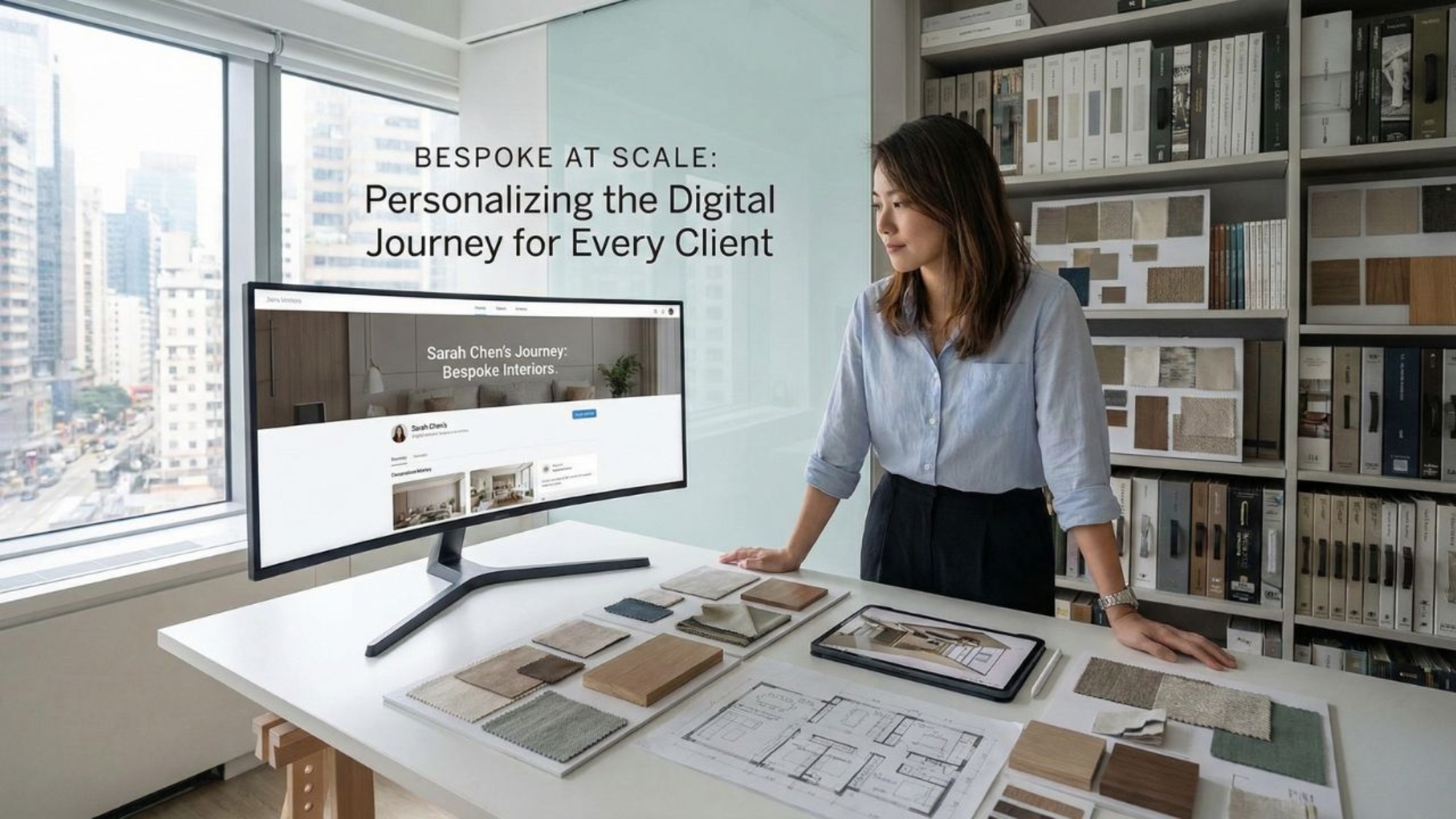
Bespoke at Scale: Personalizing the Digital Journey for Every Client

In the rarefied air of super-prime interior design, the word “bespoke” is the ultimate currency. To the clients of elite firms in London’s Belgravia or Dubai’s Emirates Hills, bespoke doesn’t just mean a custom-sized joinery unit; it means a space that has been forensicly adjusted to the unique cadence of their life. It is the architectural equivalent of a Savile Row suit—cut to the individual, not the archetype.

However, a strategic paradox has emerged for the modern Principal. As your firm grows and your “Business of Awe” expands globally, how do you maintain that high-touch, hyper-personalized “Founder’s Touch” without becoming a bottleneck? The challenge of 2026 is achieving Bespoke at Scale: using the digital interface not to automate the human relationship, but to deepen it.

The Dilemma: The Generic Luxury Fallacy

The fundamental dilemma of scaling a high-end practice is the “Template Trap.” As firms grow, they often default to standardized presentation decks and generic portfolio galleries to save time. This is a catastrophic error in the luxury sector.

A high-net-worth individual is not looking for a “best-selling” aesthetic; they are looking for a singular spatial narrative. When a client receives a digital proposal that feels like a copy-paste of a previous project, the “aura” of exclusivity vanishes. If the digital journey feels generic, the client subconsciously assumes the design will be generic too. In the elite market, the moment a client feels like a number in a CRM, the premium fee becomes indefensible. You cannot sell “one-of-a-kind” through a “one-to-many” medium.

The Analysis: The Personalized Digital Twin

To bridge this gap, the modern firm must leverage Digital Classicism—using sophisticated technology to restore the intimacy of the master-apprentice relationship. We move from “showing work” to “curating a journey.”

Achieving Bespoke at Scale relies on three pillars of Digital Craftsmanship:

  1. The “Living” Client Portal: Instead of static PDFs, provide each client with a private, immersive “Project Journal.” This digital sanctum evolves in real-time. It doesn’t just show renders; it tracks the intellectual evolution of their specific project, featuring personal video briefings from the Principal that address their specific “phenomenological” concerns.
  2. Interactive Material Prototyping: Personalization at scale means giving the client agency without losing design control. Through high-fidelity immersive twins, a client in Dubai can virtually “swap” a Tinos marble floor for a Fior di Bosco in their future London townhouse, seeing the light-play adjust instantly. This is “haptic feedback” delivered digitally, making the client feel like a co-author of the vision.
  3. Algorithmic Empathy: Use data to anticipate client needs. If a client has expressed a penchant for mid-century Italian lighting, their digital portal should subtly prioritize content and “Spatial Narratives” that reflect that interest. This isn’t “marketing automation”; it is “digital hospitality.”

The Strategy: Engineering the Bespoke Workflow

For the Founder, the goal is to use technology to replicate your “eye” across every digital touchpoint.

  • The “Modular Narrative” Library: Build a repository of high-fidelity digital “vignettes”—specific details of joinery, lighting, or materiality that define your firm’s DNA. Use these as building blocks to create a personalized, immersive “Experience Deck” for new prospects in minutes rather than days.
  • The “Founder’s Proxy” Video: Record a series of deep-dives into your design philosophy. Use these as personalized “intermissions” in the client’s digital journey. It provides the feeling of a 1-on-1 consultation even when you are on a flight to a site visit.
  • Virtual “In-Situ” Reviews: Use Mixed Reality to conduct remote site walks. Place your personalized digital twin into the client’s raw site in real-time. This allows for hyper-personalized design adjustments based on the actual local light and views, proving your commitment to their specific site.

The Bizwity Perspective: Technology as a Love Letter

At Bizwity, we believe that the most sophisticated technology is the kind that makes the client feel seen. We don’t view digital tools as a way to replace the human touch, but as a way to amplify it across continents and time zones.

By helping firms build “Immersive Sales Agents” and personalized digital twins, we ensure that every client experience feels like a bespoke commission. We help you move beyond the “static glass ceiling” of the generic portfolio and into a world where your digital presence is as curated and personalized as the interiors you design. In the “Business of Awe,” the firm that can scale its intimacy is the firm that truly owns the future of luxury.

Thumbnails for showcase (21)

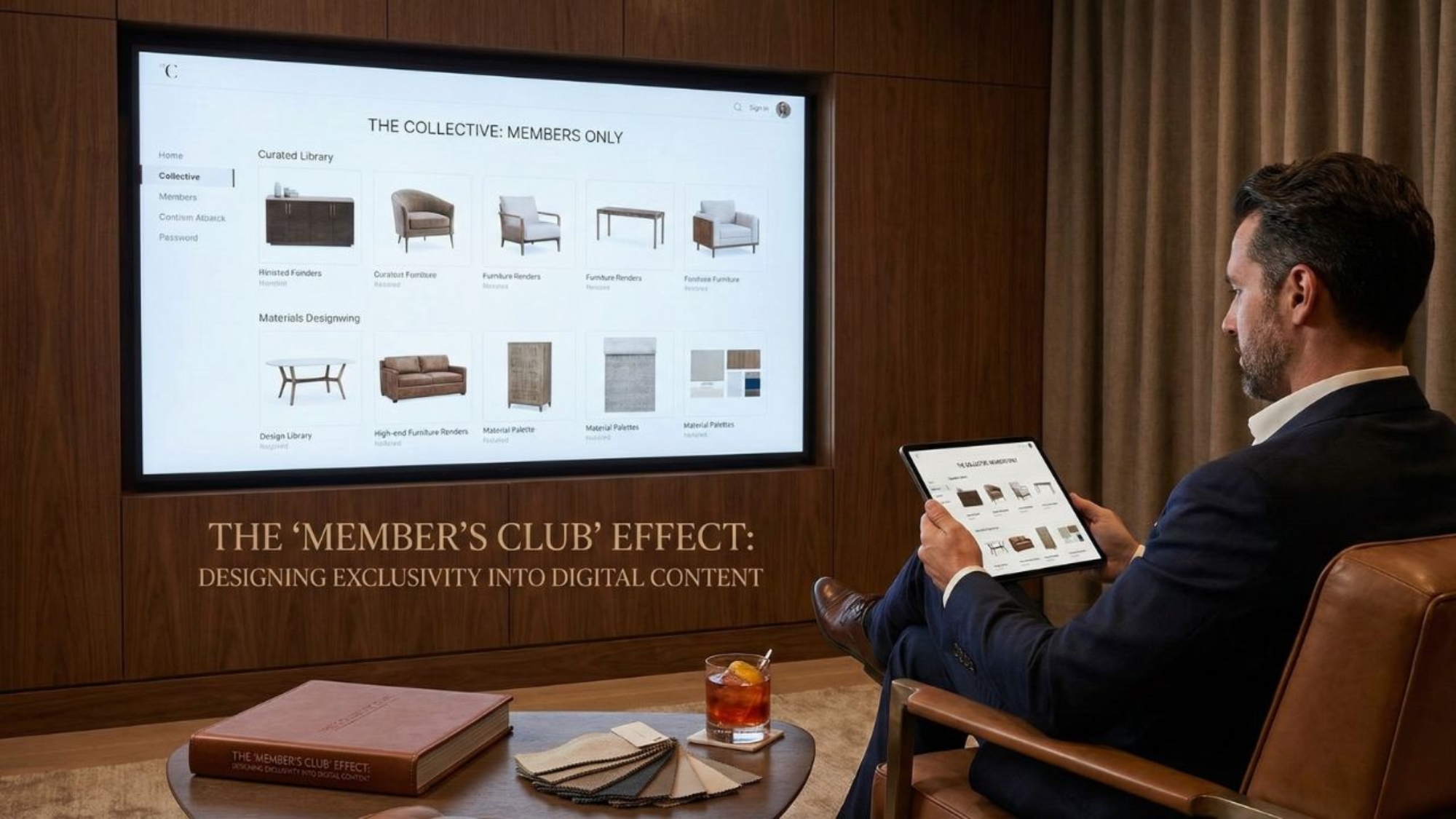
The “Member’s Club” Effect: Designing Exclusivity into Digital Content

There is a specific atmospheric shift that occurs the moment you step off a bustling street in Mayfair or the DIFC and cross the threshold of an ultra-private member’s club. It is more than just a change in lighting or the scent of expensive tobacco and oud; it is the feeling of the “inside.” The air becomes heavier with the weight of curated silence, and the visual noise of the world is replaced by a high-fidelity “spatial narrative” designed for a select few.

For the Principals of elite design firms, this sense of exclusivity is the cornerstone of their physical practice. Yet, the moment they move into the digital realm, that velvet rope often disappears. They trade the sanctuary of the club for the cacophony of the commons. The challenge for 2026 is a strategic one: how do you design the “Member’s Club” effect into your digital content to attract the one-percenters who flee from the generic?

The Dilemma: The Vulnerability of Total Accessibility

The fundamental dilemma of the modern architectural portfolio is its inherent “publicness.” In an effort to be seen, many firms have accidentally made themselves common. When every project, every sketch, and every material board is available to anyone with a browser, the “aura” of the firm—the intangible sense of mystery and elite access—evaporates.

Traditional digital methods—the static website, the Instagram grid, the mass-blasted PDF—are designed for reach, not resonance. For a HNW client in London or Dubai, a firm that is “everywhere” is rarely the firm they want in their private sanctum. This accessibility creates a “Prestige Gap.” If the digital experience of your firm feels like a public gallery rather than a private viewing room, you are failing to signal the level of “experiential luxury” you actually provide.

The Analysis: Layers of the Digital Sanctum

To reclaim your exclusivity, you must treat your digital presence not as a billboard, but as a tiered architectural plan. In the philosophy of Digital Classicism, we apply the principles of the private club—curation, recognition, and the “slow reveal”—to our digital craftsmanship.

  1. Atmospheric Gating: Exclusive clubs don’t just use bouncers; they use architecture to gate access. A digital sanctum should do the same. This isn’t about clunky passwords; it’s about “experience-led entry.” Imagine a website that begins with a single, high-fidelity immersive vignette—a digital “foyer”—that requires the visitor to linger and engage before the deeper “spatial narratives” are revealed.
  2. Curation as a Filter: A member’s club is defined by who is not there. Your digital content must perform the same act of exclusion. By focusing on deep, intellectual “Thought Leadership” and forensic design details rather than generic “lifestyle” shots, you are signaling to the market that your work is a specialized language, spoken only by those with the sophistication to understand it.
  3. The Digital Concierge: Exclusivity is rooted in the “Founder’s Touch.” Your digital platforms should feel personalized. This means moving away from mass-produced content and toward “bespoke digital briefings”—personalized, immersive digital twins or private journals created specifically for a prospect’s unique site and psychology.

The Strategy: Building the Velvet Rope

For the Principal looking to scale their “Business of Awe,” the goal is to turn the digital experience into a rite of passage.

  • Implement “Tiered Transparency”: Keep your public portfolio lean and provocative—a tease of your “signature friction.” Reserve your deepest case studies, material explorations, and VR walkthroughs for a “Private Journal” accessible only to qualified prospects.
  • The “Invite-Only” Digital Twin: When presenting a new concept, don’t send a link to a gallery. Send an invitation to a “Private Digital Viewing.” Frame it as an exclusive event where the Principal will personally guide the client through the immersive “spatial narrative.”
  • Design for “Haptic Recognition”: Ensure your digital content uses textures and lighting that only a sophisticated eye would appreciate. When a client sees the raking light across a digital Tinos marble slab, they should feel a sense of recognition—that this firm speaks their sensory language.

The Bizwity Perspective: The Private Viewing Room

At Bizwity, we believe that the future of high-end business development is the “Immersive Salon.” We help firms move away from the public-facing “collection” and toward a curated, “Member’s Club” digital experience.

By utilizing high-fidelity digital twins and private immersive portals, we allow Principals to host their clients in a digital environment that feels as exclusive and atmospheric as a Mayfair boardroom. We don’t just help you build a website; we help you architect a sanctuary for your vision. In the 2026 market, the firm that knows how to close the digital door is the one that the most important clients will be clamoring to get into.

Thumbnails for showcase (20)

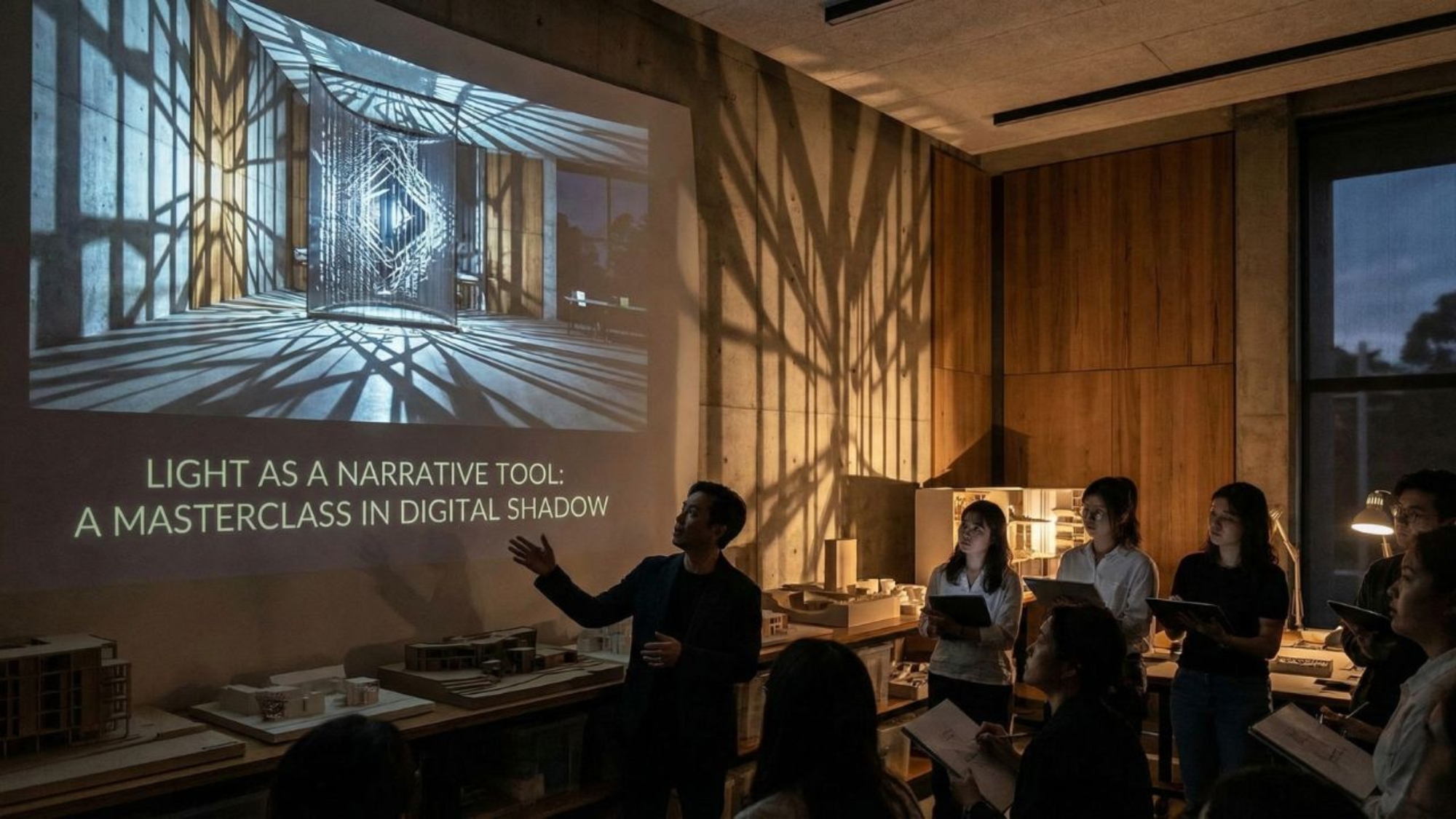
Light as a Narrative Tool: A Masterclass in Digital Shadow

There is a precise moment in a project’s lifecycle that every Principal in London or Dubai recognizes: the first time the sun hits the finished site at 4:00 PM. It is the moment the “spatial narrative” ceases to be an intellectual exercise and becomes a visceral reality. The way a long, raking shadow falls across a fluted stone wall doesn’t just indicate the time of day; it dictates the emotional temperature of the room. It is the difference between a house and a sanctuary.

Yet, for years, our industry has been obsessed with the wrong half of the equation. We have mastered “lighting,” but we have neglected “shadow.” In the “Business of Awe,” shadow is not merely the absence of light; it is the most powerful storytelling tool in the architect’s arsenal. The challenge for 2026 is moving beyond the clinical, over-lit renders of the past and mastering the art of the Digital Shadow.

The Dilemma: The Sterile Brightness of the Static Render

The fundamental failure of traditional architectural visualization is its fear of the dark. Most static renders—the kind that fill the PDFs sent to HNW clients—are optimized for clarity, not for atmosphere. They are “even,” bright, and fundamentally dishonest. By illuminating every corner to prove the design is “there,” we inadvertently strip the space of its soul.

When a presentation lacks the “phenomenology of shadow,” it lacks depth. The client cannot perceive the weight of the materials or the volume of the voids. This creates a “Sensory Flatness” that devalues the design. If a client in a Mayfair boardroom cannot feel the moody, chiaroscuro-inspired transition from a bright atrium to a darkened gallery, they cannot value the intellectual rigor that went into that transition. You are selling a flat image, but they are looking for an immersive experience.

The Analysis: Chiaroscuro in the Age of Code

To reclaim the narrative power of light, we must return to the principles of the masters—from Caravaggio to Kahn—and apply them through the lens of Digital Classicism. This is where Digital Craftsmanship meets the “haptic soul” of architecture.

A Masterclass in Digital Shadow requires an understanding of three core atmospheric principles:

  1. The “Shadow Gap” and Materiality: Shadow is the only thing that proves texture. Without the microscopic shadows cast by the grain of hand-hewn oak or the rough-hewn edge of a limestone block, a material looks like plastic. High-fidelity digital twins must prioritize “ambient occlusion”—the subtle darkening in the corners and crevices—to trigger the client’s tactile memory.
  2. Circadian Narrative: Light is a clock. In the elite residential market, you aren’t just selling a room; you are selling a 24-hour cycle of well-being. Using real-time ray tracing, we can now simulate the exact movement of light and shadow across a site’s specific coordinates. Showing a client the “4 PM Shadow” is a more powerful sales tool than showing them the floor plan.
  3. The Emotional Pivot: Shadow creates “spatial punctuation.” A sudden pool of darkness can act as a psychological reset, preparing the inhabitant for the next “reveal.” Mastering this digital chiaroscuro allows the architect to “direct” the client’s emotional journey through the space long before the first stone is laid.

The Strategy: Designing with the “Off” Switch

For the Principal looking to secure high-value commissions, the strategy must shift from showing the design to simulating the atmosphere.

  • The “Shadow-First” Review: In your next internal design review, turn off the artificial “work lights” in your model. See if the architecture still holds its own when only natural, raking light is applied. If the “spatial narrative” disappears in the shadows, the design isn’t strong enough.
  • Narrative Lighting Vignettes: Instead of a generic “daylight” render, provide three “Atmospheric Vignettes”: The Morning Threshold, The Midday Zenith, and The Evening Ember. Focus on the shadows.
  • The Haptic Proof: Use immersive VR to let the client “stand” in the shadow. Let them experience the cooling effect of the shade and the warmth of the light-play. This provides the “haptic feedback” that closes the gap between aspiration and certainty.

The Bizwity Perspective: The Architecture of Atmosphere

At Bizwity, we believe that the most sophisticated technology is the kind that knows how to handle the dark. Our approach to “Digital Classicism” is centered on the idea that the “soul” of a building lives in its shadows.

By utilizing high-fidelity real-time engines, we help Principals move beyond the “static glass ceiling” of the traditional render. We don’t just help you light your projects; we help you curate the darkness. We allow your clients to experience the “phenomenology of space” through immersive storytelling that respects the tempo of light. In the 2026 market, the firm that masters the Digital Shadow is the firm that truly owns the “Business of Awe.”