Thumbnails for showcase (23)

Texture, Tension, and Time: The Three Pillars of Exceptional Interior Photography

In the rarefied world of high-end design, a photograph is never just a document. It is a portal. For the Principal of a firm in Mayfair or Dubai, the camera is the primary translator of the “haptic soul” of a project. Yet, many firms fall into the trap of “clinical perfection”—images that are sharp and bright, but emotionally sterile.

To capture the Business of Awe, interior photography must move beyond the static record and embrace Digital Classicism. It requires a mastery of three invisible elements that define how a human brain perceives luxury: Texture, Tension, and Time.


1. Texture: The Haptic Soul

Architecture is experienced through the skin. The primary goal of exceptional photography is to trigger a tactile memory in the viewer.

  • The Macro Narrative: It’s not just about the room; it’s about the raking light that reveals the microscopic grain of hand-planed oak or the cold, crystalline depth of a Tinos marble slab.
  • Material Honesty: In the digital age, we use photography to prove that the “Digital Craftsmanship” promised in the renders has been realized in the physical world. If the viewer can’t “feel” the fabric of the sofa through the screen, the image has failed its sensory duty.

2. Tension: The Spatial Narrative

A great interior photograph should feel like a single frame from a cinematic masterpiece. It should contain narrative friction.

  • The Art of the “In-Between”: Instead of perfectly centered, wide-angle shots, exceptional photography focuses on thresholds and sightlines. It teases the “Reveal.”
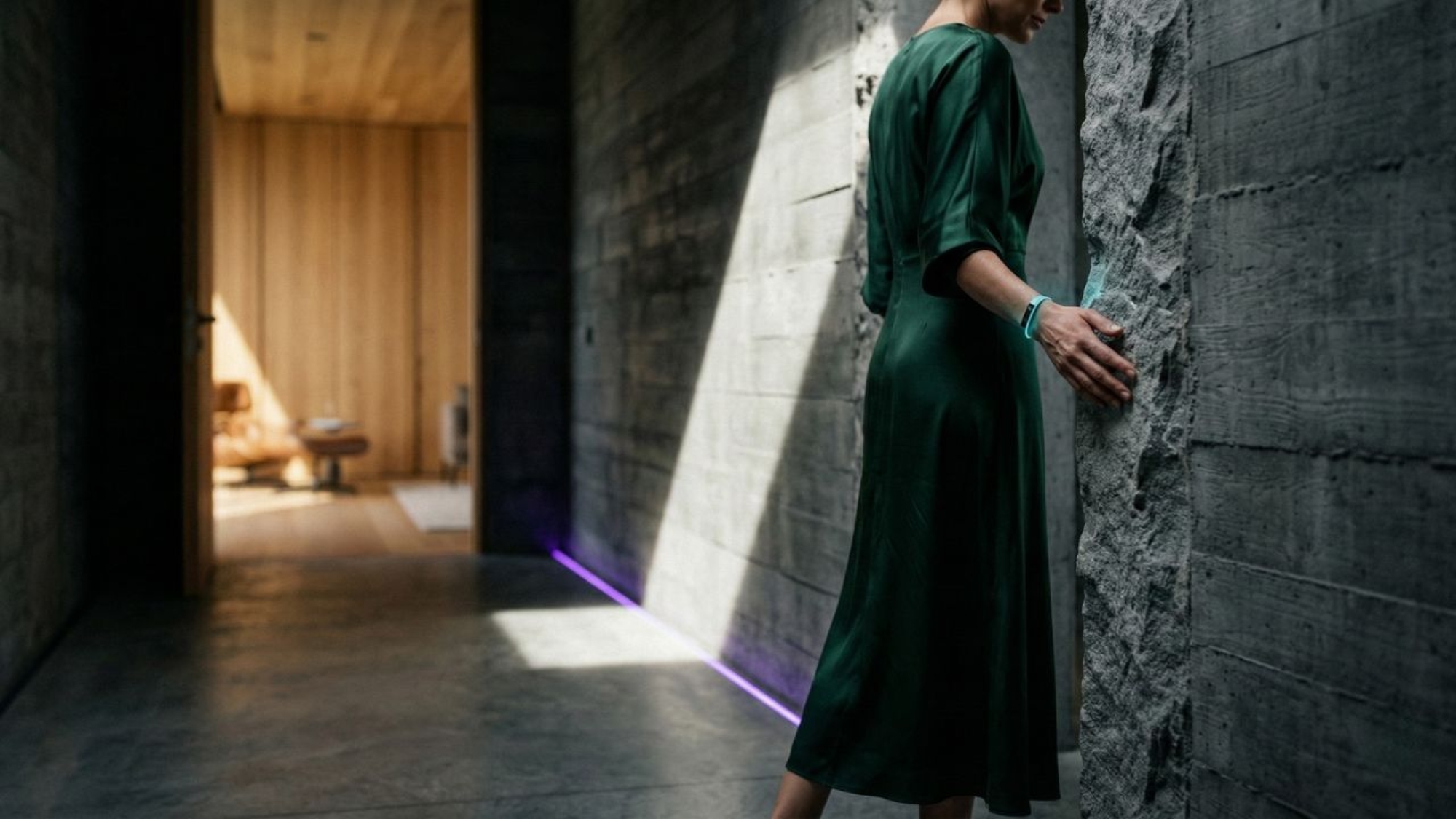
  • Human Presence: By including a “Human Element”—a blurred figure in motion or a hand resting on a textured surface—we create a sense of scale and life. It transforms a gallery into a home. This is the “Sherlock Holmes” method of photography: providing enough detail for the viewer to reconstruct the life lived within the walls.

3. Time: The Circadian Rhythm

Light is not a static utility; it is a clock. To capture the atmosphere of a space, the photographer must be a master of the Digital Shadow.

  • The 4:00 PM Shadow: Every space has a “hero hour.” Exceptional photography captures the specific, moody chiaroscuro of a room at dusk or the sharp, energetic light of dawn.
  • Atmospheric Density: We don’t just photograph objects; we photograph the air between them. By capturing the way light “bleeds” around a bronze screen or catches dust motes in a sunbeam, we convey the “phenomenology of space.”

The Bizwity Perspective: Beyond the Static Frame

At Bizwity, we believe that while a single photograph can be a masterpiece, the future of architectural storytelling is Immersive Journeying.

We take the principles of exceptional photography—texture, tension, and time—and apply them to high-fidelity digital twins. We allow your clients to move through the “Tension” of your hallways and experience the “Time” of your lighting design in real-time. We don’t just capture a moment; we provide a preview of a legacy.
Thumbnails for showcase (22)

Bespoke at Scale: Personalizing the Digital Journey for Every Client

In the rarefied air of super-prime interior design, the word “bespoke” is the ultimate currency. To the clients of elite firms in London’s Belgravia or Dubai’s Emirates Hills, bespoke doesn’t just mean a custom-sized joinery unit; it means a space that has been forensicly adjusted to the unique cadence of their life. It is the architectural equivalent of a Savile Row suit—cut to the individual, not the archetype.

However, a strategic paradox has emerged for the modern Principal. As your firm grows and your “Business of Awe” expands globally, how do you maintain that high-touch, hyper-personalized “Founder’s Touch” without becoming a bottleneck? The challenge of 2026 is achieving Bespoke at Scale: using the digital interface not to automate the human relationship, but to deepen it.

The Dilemma: The Generic Luxury Fallacy

The fundamental dilemma of scaling a high-end practice is the “Template Trap.” As firms grow, they often default to standardized presentation decks and generic portfolio galleries to save time. This is a catastrophic error in the luxury sector.

A high-net-worth individual is not looking for a “best-selling” aesthetic; they are looking for a singular spatial narrative. When a client receives a digital proposal that feels like a copy-paste of a previous project, the “aura” of exclusivity vanishes. If the digital journey feels generic, the client subconsciously assumes the design will be generic too. In the elite market, the moment a client feels like a number in a CRM, the premium fee becomes indefensible. You cannot sell “one-of-a-kind” through a “one-to-many” medium.

The Analysis: The Personalized Digital Twin

To bridge this gap, the modern firm must leverage Digital Classicism—using sophisticated technology to restore the intimacy of the master-apprentice relationship. We move from “showing work” to “curating a journey.”

Achieving Bespoke at Scale relies on three pillars of Digital Craftsmanship:

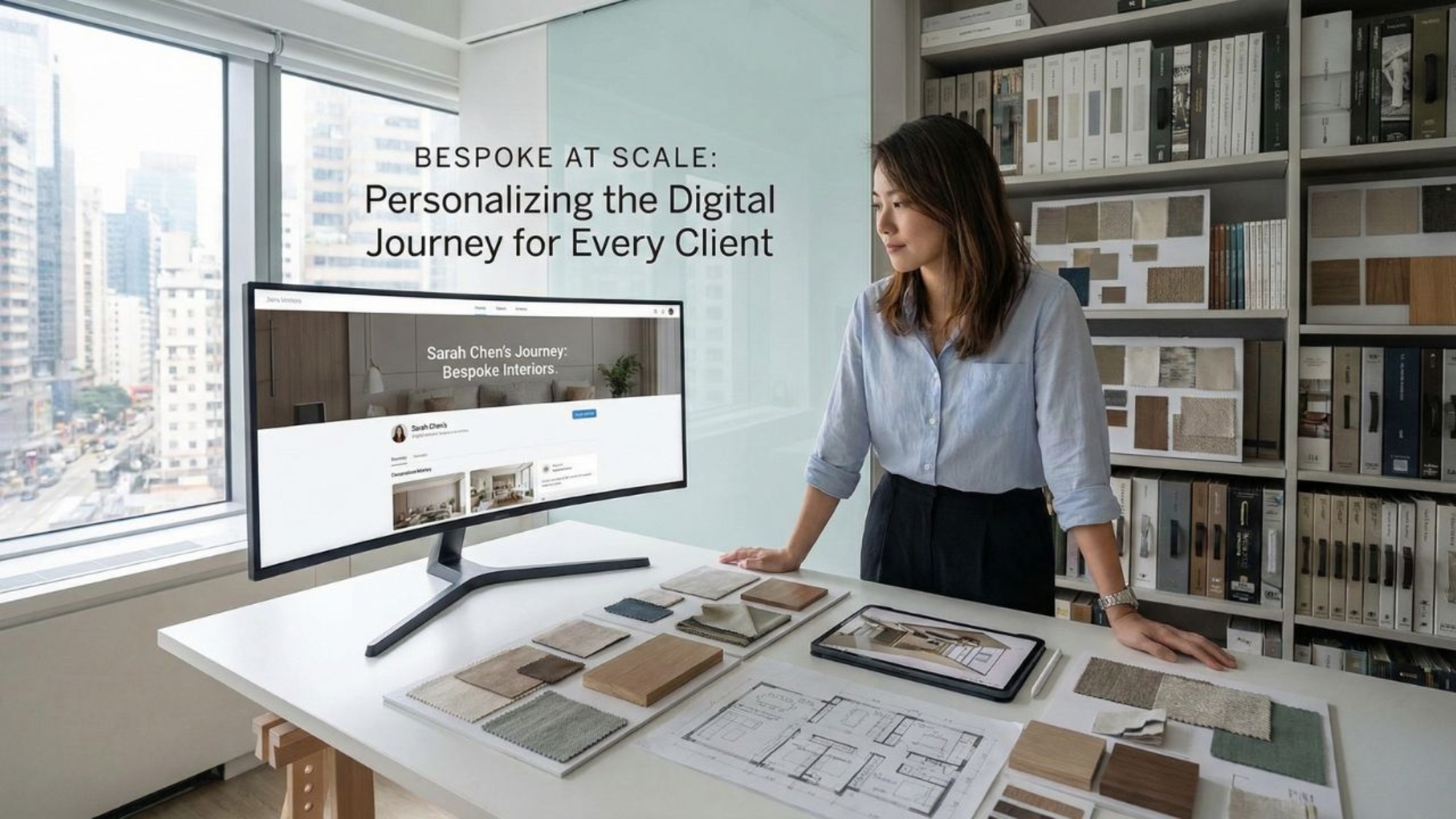
  1. The “Living” Client Portal: Instead of static PDFs, provide each client with a private, immersive “Project Journal.” This digital sanctum evolves in real-time. It doesn’t just show renders; it tracks the intellectual evolution of their specific project, featuring personal video briefings from the Principal that address their specific “phenomenological” concerns.
  2. Interactive Material Prototyping: Personalization at scale means giving the client agency without losing design control. Through high-fidelity immersive twins, a client in Dubai can virtually “swap” a Tinos marble floor for a Fior di Bosco in their future London townhouse, seeing the light-play adjust instantly. This is “haptic feedback” delivered digitally, making the client feel like a co-author of the vision.
  3. Algorithmic Empathy: Use data to anticipate client needs. If a client has expressed a penchant for mid-century Italian lighting, their digital portal should subtly prioritize content and “Spatial Narratives” that reflect that interest. This isn’t “marketing automation”; it is “digital hospitality.”

The Strategy: Engineering the Bespoke Workflow

For the Founder, the goal is to use technology to replicate your “eye” across every digital touchpoint.

  • The “Modular Narrative” Library: Build a repository of high-fidelity digital “vignettes”—specific details of joinery, lighting, or materiality that define your firm’s DNA. Use these as building blocks to create a personalized, immersive “Experience Deck” for new prospects in minutes rather than days.
  • The “Founder’s Proxy” Video: Record a series of deep-dives into your design philosophy. Use these as personalized “intermissions” in the client’s digital journey. It provides the feeling of a 1-on-1 consultation even when you are on a flight to a site visit.
  • Virtual “In-Situ” Reviews: Use Mixed Reality to conduct remote site walks. Place your personalized digital twin into the client’s raw site in real-time. This allows for hyper-personalized design adjustments based on the actual local light and views, proving your commitment to their specific site.

The Bizwity Perspective: Technology as a Love Letter

At Bizwity, we believe that the most sophisticated technology is the kind that makes the client feel seen. We don’t view digital tools as a way to replace the human touch, but as a way to amplify it across continents and time zones.

By helping firms build “Immersive Sales Agents” and personalized digital twins, we ensure that every client experience feels like a bespoke commission. We help you move beyond the “static glass ceiling” of the generic portfolio and into a world where your digital presence is as curated and personalized as the interiors you design. In the “Business of Awe,” the firm that can scale its intimacy is the firm that truly owns the future of luxury.

Thumbnails for showcase (21)

The “Member’s Club” Effect: Designing Exclusivity into Digital Content

There is a specific atmospheric shift that occurs the moment you step off a bustling street in Mayfair or the DIFC and cross the threshold of an ultra-private member’s club. It is more than just a change in lighting or the scent of expensive tobacco and oud; it is the feeling of the “inside.” The air becomes heavier with the weight of curated silence, and the visual noise of the world is replaced by a high-fidelity “spatial narrative” designed for a select few.

For the Principals of elite design firms, this sense of exclusivity is the cornerstone of their physical practice. Yet, the moment they move into the digital realm, that velvet rope often disappears. They trade the sanctuary of the club for the cacophony of the commons. The challenge for 2026 is a strategic one: how do you design the “Member’s Club” effect into your digital content to attract the one-percenters who flee from the generic?

The Dilemma: The Vulnerability of Total Accessibility

The fundamental dilemma of the modern architectural portfolio is its inherent “publicness.” In an effort to be seen, many firms have accidentally made themselves common. When every project, every sketch, and every material board is available to anyone with a browser, the “aura” of the firm—the intangible sense of mystery and elite access—evaporates.

Traditional digital methods—the static website, the Instagram grid, the mass-blasted PDF—are designed for reach, not resonance. For a HNW client in London or Dubai, a firm that is “everywhere” is rarely the firm they want in their private sanctum. This accessibility creates a “Prestige Gap.” If the digital experience of your firm feels like a public gallery rather than a private viewing room, you are failing to signal the level of “experiential luxury” you actually provide.

The Analysis: Layers of the Digital Sanctum

To reclaim your exclusivity, you must treat your digital presence not as a billboard, but as a tiered architectural plan. In the philosophy of Digital Classicism, we apply the principles of the private club—curation, recognition, and the “slow reveal”—to our digital craftsmanship.

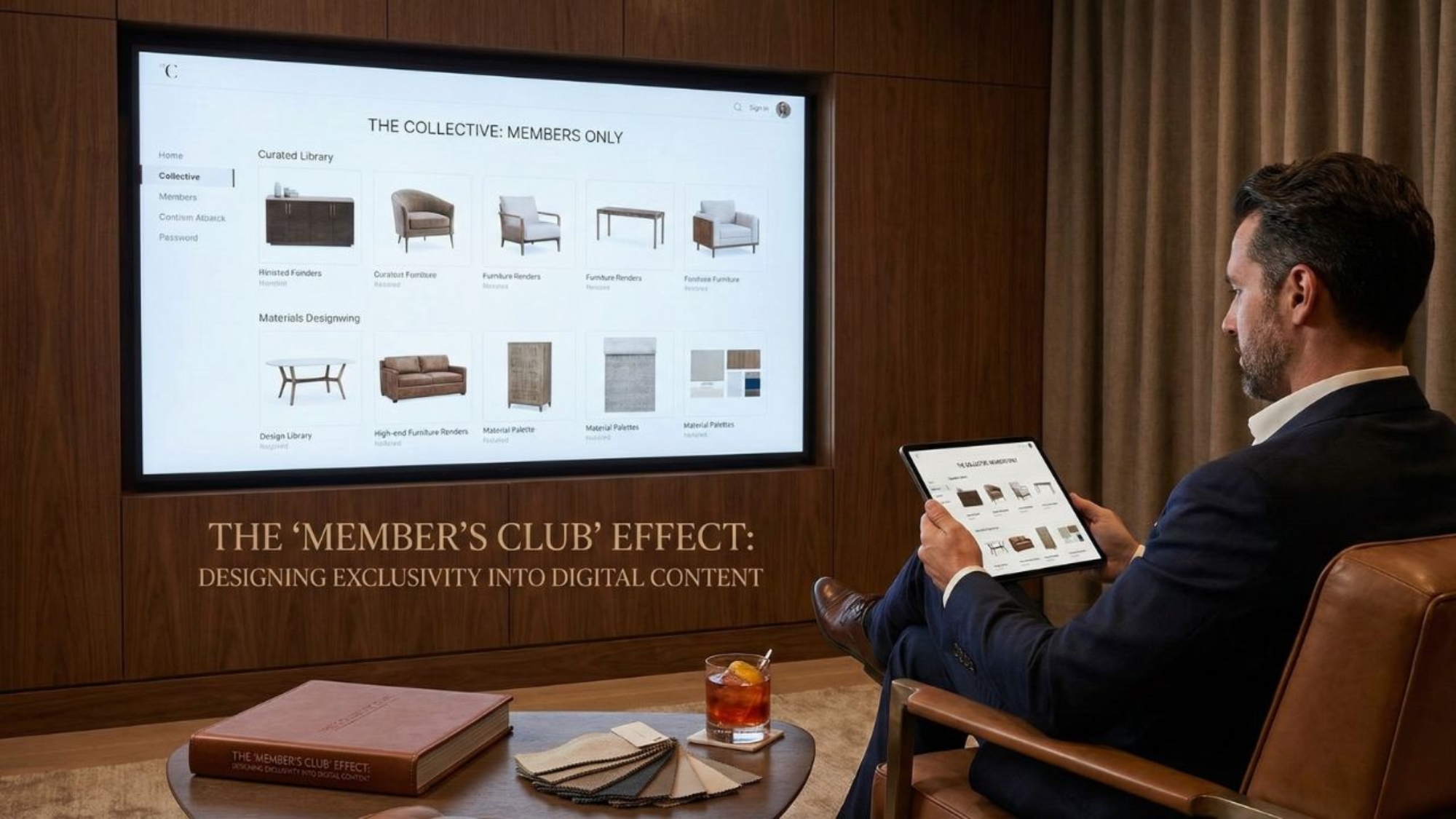
  1. Atmospheric Gating: Exclusive clubs don’t just use bouncers; they use architecture to gate access. A digital sanctum should do the same. This isn’t about clunky passwords; it’s about “experience-led entry.” Imagine a website that begins with a single, high-fidelity immersive vignette—a digital “foyer”—that requires the visitor to linger and engage before the deeper “spatial narratives” are revealed.
  2. Curation as a Filter: A member’s club is defined by who is not there. Your digital content must perform the same act of exclusion. By focusing on deep, intellectual “Thought Leadership” and forensic design details rather than generic “lifestyle” shots, you are signaling to the market that your work is a specialized language, spoken only by those with the sophistication to understand it.
  3. The Digital Concierge: Exclusivity is rooted in the “Founder’s Touch.” Your digital platforms should feel personalized. This means moving away from mass-produced content and toward “bespoke digital briefings”—personalized, immersive digital twins or private journals created specifically for a prospect’s unique site and psychology.

The Strategy: Building the Velvet Rope

For the Principal looking to scale their “Business of Awe,” the goal is to turn the digital experience into a rite of passage.

  • Implement “Tiered Transparency”: Keep your public portfolio lean and provocative—a tease of your “signature friction.” Reserve your deepest case studies, material explorations, and VR walkthroughs for a “Private Journal” accessible only to qualified prospects.
  • The “Invite-Only” Digital Twin: When presenting a new concept, don’t send a link to a gallery. Send an invitation to a “Private Digital Viewing.” Frame it as an exclusive event where the Principal will personally guide the client through the immersive “spatial narrative.”
  • Design for “Haptic Recognition”: Ensure your digital content uses textures and lighting that only a sophisticated eye would appreciate. When a client sees the raking light across a digital Tinos marble slab, they should feel a sense of recognition—that this firm speaks their sensory language.

The Bizwity Perspective: The Private Viewing Room

At Bizwity, we believe that the future of high-end business development is the “Immersive Salon.” We help firms move away from the public-facing “collection” and toward a curated, “Member’s Club” digital experience.

By utilizing high-fidelity digital twins and private immersive portals, we allow Principals to host their clients in a digital environment that feels as exclusive and atmospheric as a Mayfair boardroom. We don’t just help you build a website; we help you architect a sanctuary for your vision. In the 2026 market, the firm that knows how to close the digital door is the one that the most important clients will be clamoring to get into.

Thumbnails for showcase (20)

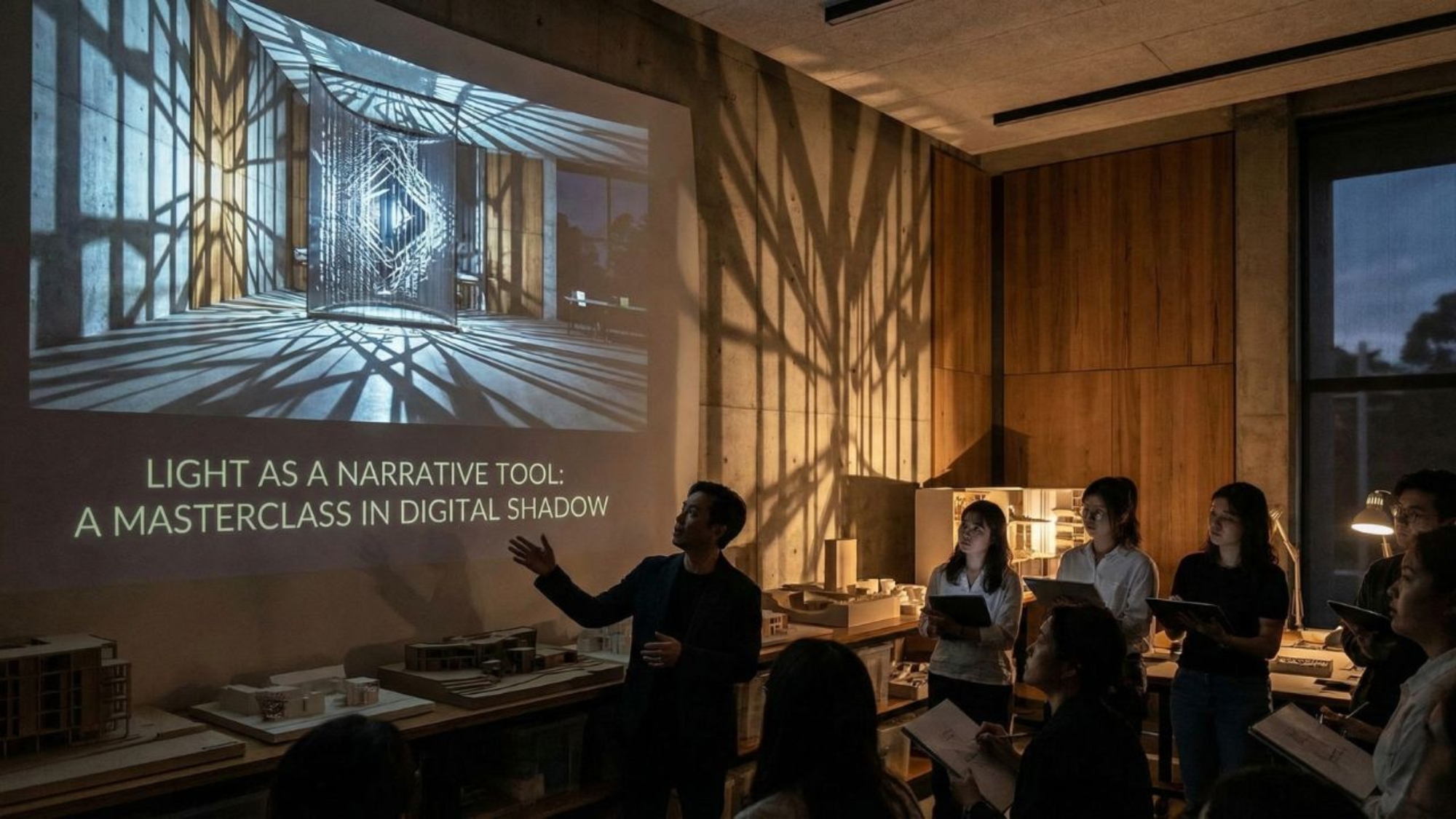
Light as a Narrative Tool: A Masterclass in Digital Shadow

There is a precise moment in a project’s lifecycle that every Principal in London or Dubai recognizes: the first time the sun hits the finished site at 4:00 PM. It is the moment the “spatial narrative” ceases to be an intellectual exercise and becomes a visceral reality. The way a long, raking shadow falls across a fluted stone wall doesn’t just indicate the time of day; it dictates the emotional temperature of the room. It is the difference between a house and a sanctuary.

Yet, for years, our industry has been obsessed with the wrong half of the equation. We have mastered “lighting,” but we have neglected “shadow.” In the “Business of Awe,” shadow is not merely the absence of light; it is the most powerful storytelling tool in the architect’s arsenal. The challenge for 2026 is moving beyond the clinical, over-lit renders of the past and mastering the art of the Digital Shadow.

The Dilemma: The Sterile Brightness of the Static Render

The fundamental failure of traditional architectural visualization is its fear of the dark. Most static renders—the kind that fill the PDFs sent to HNW clients—are optimized for clarity, not for atmosphere. They are “even,” bright, and fundamentally dishonest. By illuminating every corner to prove the design is “there,” we inadvertently strip the space of its soul.

When a presentation lacks the “phenomenology of shadow,” it lacks depth. The client cannot perceive the weight of the materials or the volume of the voids. This creates a “Sensory Flatness” that devalues the design. If a client in a Mayfair boardroom cannot feel the moody, chiaroscuro-inspired transition from a bright atrium to a darkened gallery, they cannot value the intellectual rigor that went into that transition. You are selling a flat image, but they are looking for an immersive experience.

The Analysis: Chiaroscuro in the Age of Code

To reclaim the narrative power of light, we must return to the principles of the masters—from Caravaggio to Kahn—and apply them through the lens of Digital Classicism. This is where Digital Craftsmanship meets the “haptic soul” of architecture.

A Masterclass in Digital Shadow requires an understanding of three core atmospheric principles:

  1. The “Shadow Gap” and Materiality: Shadow is the only thing that proves texture. Without the microscopic shadows cast by the grain of hand-hewn oak or the rough-hewn edge of a limestone block, a material looks like plastic. High-fidelity digital twins must prioritize “ambient occlusion”—the subtle darkening in the corners and crevices—to trigger the client’s tactile memory.
  2. Circadian Narrative: Light is a clock. In the elite residential market, you aren’t just selling a room; you are selling a 24-hour cycle of well-being. Using real-time ray tracing, we can now simulate the exact movement of light and shadow across a site’s specific coordinates. Showing a client the “4 PM Shadow” is a more powerful sales tool than showing them the floor plan.
  3. The Emotional Pivot: Shadow creates “spatial punctuation.” A sudden pool of darkness can act as a psychological reset, preparing the inhabitant for the next “reveal.” Mastering this digital chiaroscuro allows the architect to “direct” the client’s emotional journey through the space long before the first stone is laid.

The Strategy: Designing with the “Off” Switch

For the Principal looking to secure high-value commissions, the strategy must shift from showing the design to simulating the atmosphere.

  • The “Shadow-First” Review: In your next internal design review, turn off the artificial “work lights” in your model. See if the architecture still holds its own when only natural, raking light is applied. If the “spatial narrative” disappears in the shadows, the design isn’t strong enough.
  • Narrative Lighting Vignettes: Instead of a generic “daylight” render, provide three “Atmospheric Vignettes”: The Morning Threshold, The Midday Zenith, and The Evening Ember. Focus on the shadows.
  • The Haptic Proof: Use immersive VR to let the client “stand” in the shadow. Let them experience the cooling effect of the shade and the warmth of the light-play. This provides the “haptic feedback” that closes the gap between aspiration and certainty.

The Bizwity Perspective: The Architecture of Atmosphere

At Bizwity, we believe that the most sophisticated technology is the kind that knows how to handle the dark. Our approach to “Digital Classicism” is centered on the idea that the “soul” of a building lives in its shadows.

By utilizing high-fidelity real-time engines, we help Principals move beyond the “static glass ceiling” of the traditional render. We don’t just help you light your projects; we help you curate the darkness. We allow your clients to experience the “phenomenology of space” through immersive storytelling that respects the tempo of light. In the 2026 market, the firm that masters the Digital Shadow is the firm that truly owns the “Business of Awe.”

Thumbnails for showcase (19)

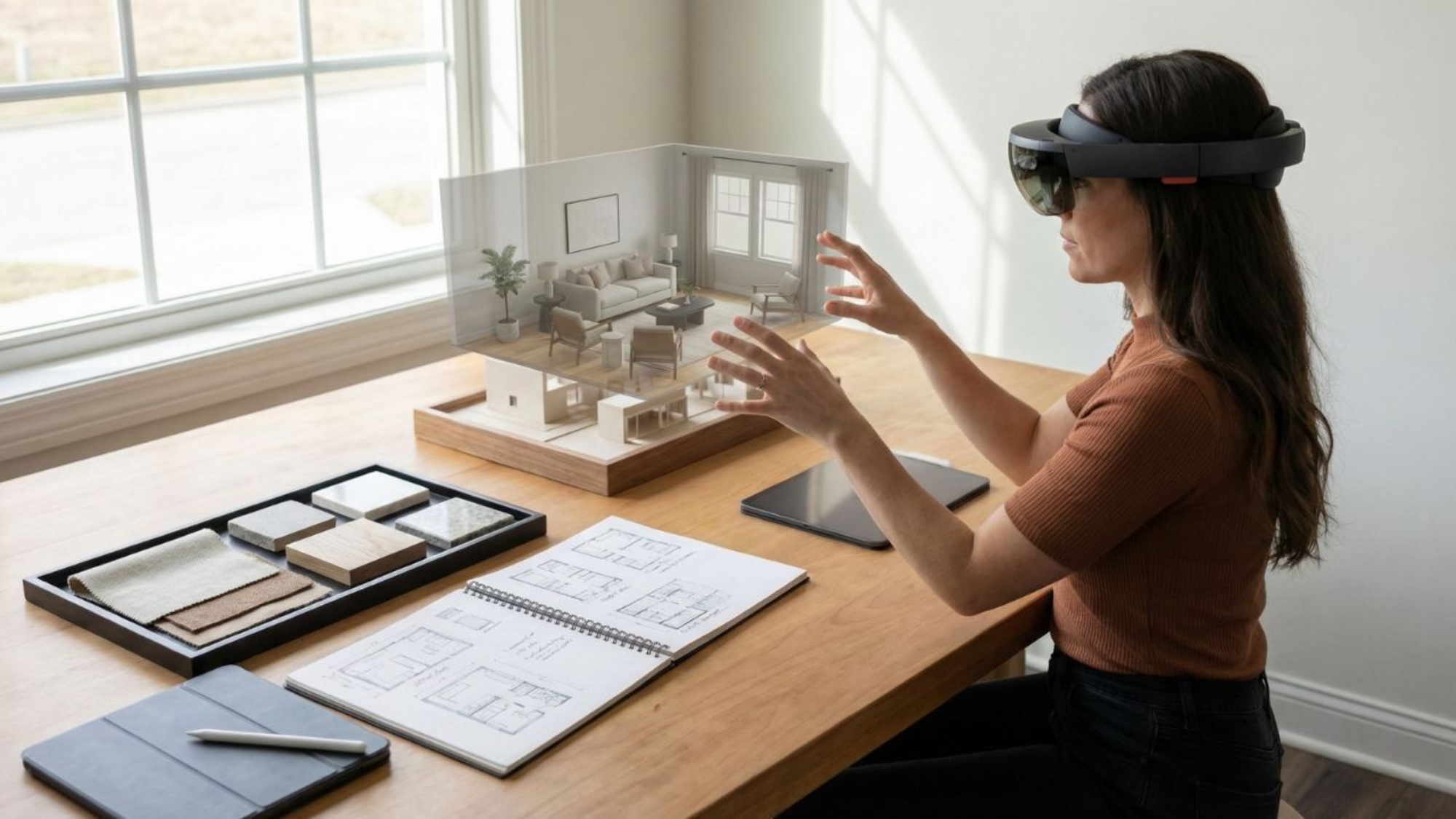
The Interior Architect’s New Toolkit: From Sketchbook to Mixed Reality

The tactile friction of a 4B pencil on a heavy-grain Moleskine is the foundational ritual of our craft. It is the moment where architectural intuition first meets the physical world—a direct, haptic line from the brain to the page. For the Principals of elite design firms in London and Dubai, that sketchbook is more than a tool; it is a repository of “spatial narratives” and raw design soul.

But a profound disconnect occurs the moment that sketch needs to become a reality. We take a fluid, three-dimensional vision and flatten it into 2D CAD drawings or static renders, then ask the client to perform the mental gymnastics required to imagine that vision at scale. In the “Business of Awe,” this translation is where the magic often dissipates. The challenge of 2026 is not to abandon the sketchbook, but to extend its reach through a new, high-fidelity toolkit: Mixed Reality (MR).

The Dilemma: The Spatial Translation Problem

The dilemma for the modern interior architect is the “Scale Gap.” No matter how beautiful a mood board or a 3D render might be, it remains an abstraction. A client standing in a raw, concrete shell in the Chelsea Waterfront or a skeletal penthouse in the Burj Khalifa cannot “see” the bespoke walnut joinery or the way a specific pendant light will define the dining volume through a PDF on an iPad.

Traditional tools fail to convey the phenomenology of space because they are disconnected from the site. This forces the Principal into a cycle of “over-explaining”—using words to compensate for the limitations of the medium. When you have to explain the atmosphere, you have already lost the visceral impact of the design. To secure the trust of high-net-worth individuals, we need a toolkit that allows the vision to inhabit the physical site before the first partition is built.

The Analysis: Digital Classicism in the Third Dimension

The evolution from the sketchbook to Mixed Reality represents the pinnacle of Digital Classicism. It is the use of cutting-edge technology to protect and project classical design values: proportion, light, and material integrity.

Unlike Virtual Reality, which replaces your surroundings, Mixed Reality overlays your “digital craftsmanship” onto the physical world. This creates a new form of Spatial Literacy for both the designer and the client:

  1. Haptic Prototyping in Situ: With MR, you can stand in a raw site and “place” a 1:1 digital twin of a complex marble staircase. You can walk around it, check the sightlines, and feel the “compression and expansion” of the surrounding void. The toolkit allows for forensic design adjustments that were previously only possible after construction.
  2. Materiality in Context: You can overlay high-fidelity digital textures—the patina of aged brass or the grain of hand-planed oak—onto the actual walls of the site. This allows the client to see how the “spatial narrative” reacts to the specific, local light of the room.
  3. The End of Ambiguity: MR removes the “I’ll have to trust you” factor. When the client can see the design inhabit the space through an MR interface, the psychological barrier to approval vanishes. Certainty is the ultimate luxury.

The Strategy: Integrating the New Toolkit

Transitioning your studio’s workflow from the sketchbook to Mixed Reality requires a strategic, phased approach that prioritizes design quality over tech-hype.

  • The “Hybrid Sketch” Workflow: Don’t replace the hand-drawn concept; digitize it early. Use MR to project your initial sketches onto the site at scale. This allows you to “feel” the proportions of your first instincts before committing to heavy BIM modeling.
  • Solving the “Junction” Crisis: Use MR specifically to solve complex spatial junctions—where different materials meet or where structural elements intersect. Seeing these “In-Between” spaces at 1:1 scale on-site prevents costly post-construction revisions.
  • The “Site Walk” Premiere: Replace the traditional boardroom review with an on-site MR walkthrough. Invite the client to the raw site and reveal the “Atmosphere” in its future home. This turns a technical review into a cinematic event.

The Bizwity Perspective: Empowering the Human Hand

At Bizwity, we recognize that technology should never be the “Lead Designer.” Our approach to the modern toolkit is centered on empowering the Principal’s intuition, not replacing it.

We view Mixed Reality as the ultimate empathy engine—a way to ensure the “spatial narrative” you sketched in your Moleskine is the exact reality the client experiences on-site. By bridging the gap between the analog soul and digital precision, we help elite firms maintain their “Founder’s Touch” across every inch of a project. In the 2026 market, the sketchbook provides the soul, but Mixed Reality provides the proof.

Thumbnails for showcase (18)

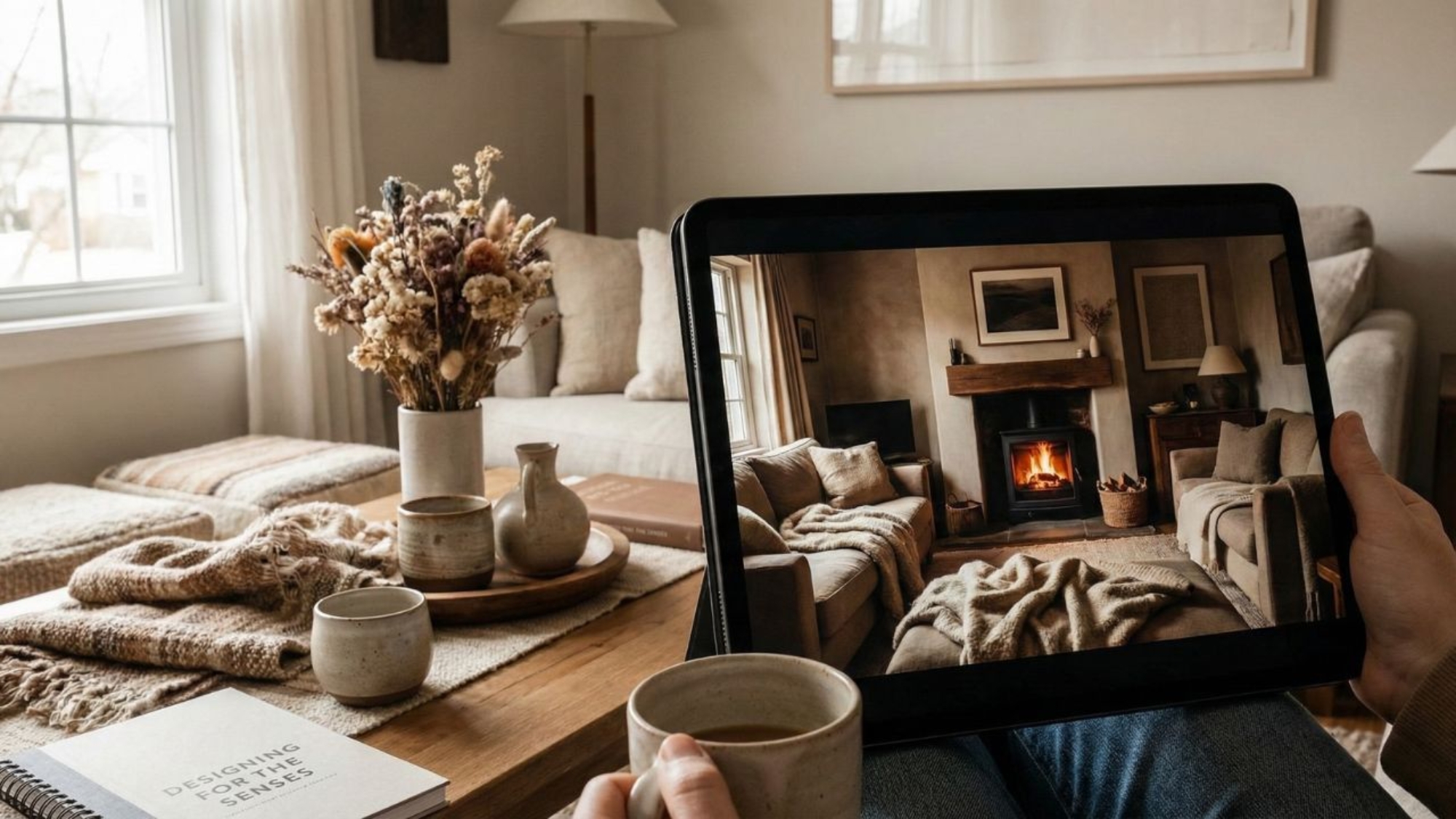
Designing for the Senses: How to Convey “Atmosphere” Through a Screen

An interior is not a collection of objects; it is a weight of air. It is the specific, silent pressure of a heavy wool curtain against a draft, the scent of waxed oak in a heritage library, and the cooling touch of a limestone floor on a mid-August afternoon in Dubai. These are the sensory anchors of “experiential luxury”—the visceral cues that tell a client they are home.

The dilemma for the modern interior designer is that our primary medium of communication has become a flat, glass rectangle. In the transition from the studio to the screen, the “atmosphere” of a project often evaporates. We are presenting high-fidelity images that are technically perfect yet haptically hollow. For the Principal of an elite firm, the challenge of 2026 is bridging this sensory void: how do you make a client feel the atmosphere of a room before the first sample is even ordered?

The Analysis: The Visual-Tactile Gap

The fundamental crisis of digital interior presentation is the “Visual-Tactile Gap.” Traditional renders prioritize geometry and color, but they ignore the phenomenology of space—the study of how we experience our environment through our bodies, not just our eyes.

When a client looks at a standard render, their brain processes it as “visual data.” They see a sofa; they don’t feel the “haptic feedback” of the mohair velvet. They see a window; they don’t perceive the specific quality of light as it filters through a bronze mesh screen. This sensory disconnect forces the client to remain a spectator rather than a participant. In the “Business of Awe,” if the client remains a spectator, they are more likely to haggle over costs. If they become a participant, they are invested in the vision.

To solve this, we must shift our digital strategy from “showing” to “simulating.” We must embrace Digital Classicism—using the highest forms of technology to honor the most ancient of human senses.

The Strategy: Engineering Sensory Proxies

Conveying atmosphere through a screen requires a move toward “Digital Craftsmanship.” You are no longer just an interior designer; you are a sensory orchestrator.

  1. Light as a Material, Not an Effect: In your digital presentations, treat light as a physical presence. Use real-time ray tracing to simulate “volumetric lighting”—the way dust motes dance in a sunbeam or how light “bleeds” around a soft edge. This creates “atmospheric density,” signaling to the client’s subconscious that the space has depth and air.
  2. Materiality as Behavior: Stop presenting static textures. In an immersive or real-time environment, show how materials behave. Show how a silk wallpaper shifts its sheen as the viewer moves, or how a hand-planed wood floor reflects a low winter sun. When materials react to their environment, the brain perceives them as “true,” triggering a tactile memory.
  3. The Acoustic Narrative: Atmosphere is 50% sound. When presenting a digital twin or an immersive walkthrough, integrate “Spatial Audio.” The slight echo of a stone-clad hallway transitioning into the dampened, hushed tones of a carpeted master suite provides a powerful sensory cue that reinforces the spatial narrative.

The Bizwity Perspective: The Immersion of Empathy

At Bizwity, we understand that the greatest barrier to design excellence is the “empathy gap” between the architect’s imagination and the client’s perception.

We view immersive technology not as a digital replacement for the physical world, but as its most sophisticated proxy. By utilizing high-fidelity real-time engines, we allow Principals to place their clients inside the “atmosphere” long before the site is even cleared. When a client can experience the “haptic soul” of an interior through an immersive journey—hearing the silence, seeing the light-play, and perceiving the material weight—the technology disappears. What remains is a profound human connection to the space. In the 2026 market, the firm that can deliver atmosphere through a screen is the firm that commands the most lucrative commissions.

Thumbnails for showcase (11)

Virtual Twin or Digital Ghost? Making Your Project Live Online

There is a specific kind of disappointment that occurs six months after a landmark project is handed over. You, the Principal, visit the site—perhaps a luxury boutique hotel in Dubai or a high-spec residential development in Chelsea—and you find that the “spatial narrative” you so carefully crafted has begun to fray. The lighting presets have been altered, the bespoke furniture has been rearranged, and the building’s performance data is a black box. The “soul” of the design, once vibrant, has become a “Digital Ghost”—a memory of a vision that no longer matches the reality.

For the elite architecture firms of 2026, the project doesn’t end at the ribbon-cutting. To maintain “Design Quality” and “Business Viability” long-term, we must move beyond the static handover. We must transition from delivering a building to delivering a Virtual Twin: a living, breathing digital counterpart that ensures your architectural intent outlives the construction phase.

The Dilemma: The Post-Occupancy Void

The traditional architectural model is a linear path to a dead end. We invest thousands of hours into “digital craftsmanship”—BIM models, high-fidelity renders, and material specifications—only to hand over a set of static PDFs and O&M manuals that will never be opened.

The dilemma is that without a living digital connection, the architect loses their “Authority” the moment the keys are turned. You have no way to track how the building is performing, how the inhabitants are actually moving through the spaces you designed, or whether the “experiential luxury” you promised is being maintained. The building becomes a ghost of your intent, and you lose the data-driven insights that should be fueling your next seven-figure commission.

The Analysis: The Anatomy of a Living Twin

A “Virtual Twin” is not merely a 3D model; it is a dynamic, data-integrated platform. In the philosophy of Digital Classicism, the Virtual Twin is the ultimate marriage of timeless design and futuristic stewardship. It differs from a “Digital Ghost” in three fundamental ways:

  1. Bi-Directional Data Flow: A Digital Ghost is a snapshot of the past. A Virtual Twin is connected to the physical building via IoT sensors. It knows the real-time temperature of the atrium, the occupancy levels of the gallery, and the energy consumption of the HVAC. It is “haptic feedback” at a structural scale.
  2. Predictive Maintenance vs. Reactive Repair: A Virtual Twin allows the firm to offer “Architecture as a Service.” You can predict when a bespoke mechanical facade element will need servicing before it fails, preserving the building’s “Legacy” and reducing the client’s long-term risk.
  3. The Feedback Loop of Awe: By analyzing how people actually use the space, you gain irrefutable data on the “ROI on design.” If the Virtual Twin shows that the “experiential zones” you designed are the most occupied, you have the proof you need to command higher fees for your next project.

The Strategy: Engineering the “Live” Handover

To avoid leaving behind Digital Ghosts, firm owners must restructure their deliverables to prioritize longevity.

  • Productize the “Living Model”: Don’t give the BIM model away for free. Offer a “Digital Stewardship” contract where your firm manages the Virtual Twin for the client. This creates recurring revenue and keeps you positioned as a strategic partner, not just a one-time vendor.
  • Integrate User Experience (UX) Data: Use the Virtual Twin to track the “phenomenology of space.” How does light affect occupancy? How does spatial flow change during different seasons? Turn these insights into “Intellectual IP” that distinguishes your firm from the competition.
  • The “Digital Concierge” Interface: Provide the client with a high-end, immersive interface to interact with their Virtual Twin. Make the building’s data as beautiful and accessible as the building itself.

The Bizwity Perspective: Stewardship as the Ultimate Sales Tool

At Bizwity, we believe that the most powerful marketing tool is a project that works perfectly ten years after completion.

By helping firms implement Virtual Twin technology, we are bridging the gap between “Design Excellence” and “Business Growth.” A Virtual Twin isn’t just a tech asset; it’s a relationship asset. It allows you to stay in the room with your client, providing value and proving your design’s worth every single day. In the “Business of Awe,” the firm that makes their projects live online is the firm that never has to fight for their next client.

Thumbnails for showcase (10)

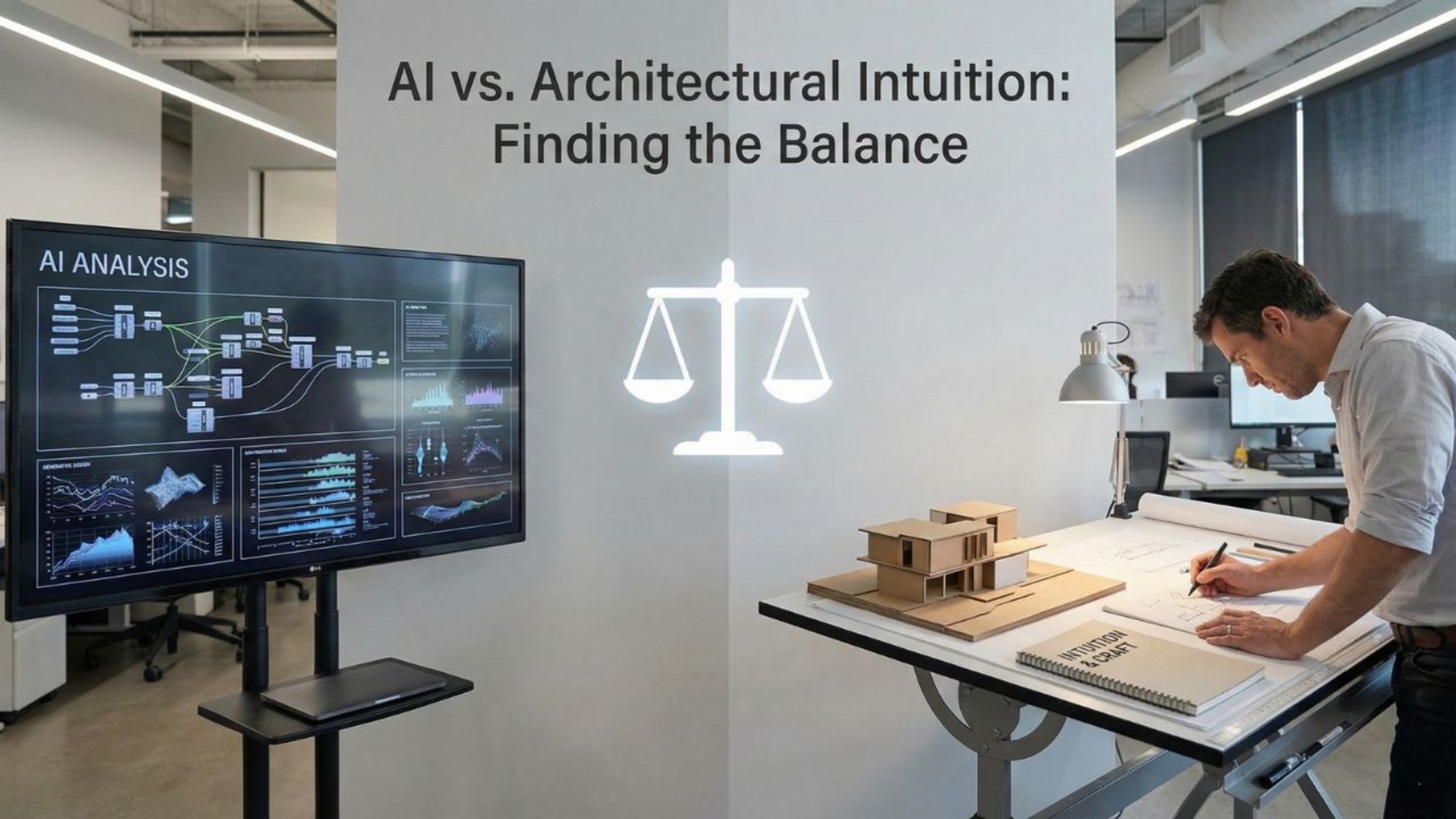
Artificial Intelligence vs. Architectural Intuition: Finding the Balance

There is a burgeoning anxiety vibrating through the studios of London and the design hubs of Dubai. It surfaces whenever a new generative algorithm produces a complex facade in seconds or an AI-driven script optimizes a floor plan for maximum yield. For the Principal who has spent decades honing their “architectural intuition”—that soul-deep understanding of proportion, light, and the “spatial narrative”—these developments can feel less like progress and more like an erasure of the craft.

The fear is that we are trading the “haptic soul” of a building for the cold efficiency of an algorithm. But as we navigate 2026, the most successful firms are discovering that the “Business of Awe” does not require a choice between human genius and machine speed. It requires a new synthesis: Digital Classicism fueled by a partnership between the gut and the grid.

The Dilemma: The Hallucination of Efficiency

The dilemma facing the modern firm owner is the seductive trap of “automated aesthetics.” AI can generate a thousand iterations of a tower in the time it takes an architect to sketch a single section. However, AI lacks a critical human faculty: Phenomenological Intent.

An algorithm can optimize for sun path or structural efficiency, but it cannot understand the feeling of a threshold. It doesn’t know why a specific shadow falling across a limestone floor at 3:00 PM creates a sense of sanctuary. When firms lean too heavily on AI-driven output without the filter of human intuition, the result is often “architectural uncanny valley”—spaces that look technically perfect but feel emotionally hollow. For the elite client, this hollow-ness is a dealbreaker. They are not paying for an optimized box; they are paying for a legacy-defining experience.

The Analysis: AI as the “Infinite Intern”

To find the balance, we must redefine the role of Artificial Intelligence. It is not the architect; it is the “Infinite Intern.” It is a tool for the heavy lifting of data synthesis, allowing the Principal to remain focused on the “digital craftsmanship” that matters.

In the framework of Digital Classicism, the balance is struck through a process of Curated Co-Creation:

  1. Iterative Breadth vs. Qualitative Depth: Use AI to explore the vast “latent space” of possibility—massing studies, material combinations, and structural permutations. Let the machine provide the breadth, while the human provides the depth of selection.
  2. The “Gut Check” as a Filter: Architectural intuition is essentially high-speed pattern recognition built on years of experience. The role of the Principal shifts from generating every line to editing the machine’s output with an authoritative “gut check.” Does this proportion feel human? Does this flow respect the ritual of the inhabitant?
  3. Data-Informed, Not Data-Driven: We use AI to provide the “Return on Design” data—energy performance, cost-of-build, and spatial efficiency. But we allow intuition to override the data when the “phenomenology of space” demands it. Sometimes, the most beautiful, human moment in a building is the most “inefficient” one.

The Strategy: Engineering the Hybrid Studio

For the firm owner, the goal is to build a studio culture where technology amplifies intuition rather than replacing it.

  • Codify Your Intuition: Create internal AI models trained on your firm’s unique “design DNA.” By feeding an AI your past successful projects, you aren’t automating your job; you are creating a digital mirror of your intuition that can help your team work faster within your established standards.
  • The Human-in-the-Loop Workflow: Ensure that every AI-generated asset is subjected to a “Haptic Review.” Before a client sees a render, it must be vetted for its emotional resonance and material honesty.
  • Focus on the “Small Data” of Experience: While AI excels at “Big Data” (yield, climate, structure), lean into the “Small Data” of human experience. Use immersive tech to walk through AI-generated spaces and adjust the “feel” in real-time.

The Bizwity Perspective: The Technology of Human Touch

At Bizwity, we view the rise of AI not as a threat to the architect, but as the ultimate liberation of the Designer. By offloading the mechanical and the repetitive to intelligent systems, you are finally free to return to the drafting table—digital or physical—to focus on the “Business of Awe.”

We help firms bridge the gap between algorithmic speed and architectural soul. Through immersive storytelling and high-fidelity digital twins, we allow you to take the raw output of AI and refine it through the lens of human intuition. The machine provides the options; you provide the soul. In the end, the most powerful AI in any project is still the one sitting between the Principal’s ears.

Thumbnails for showcase (9)

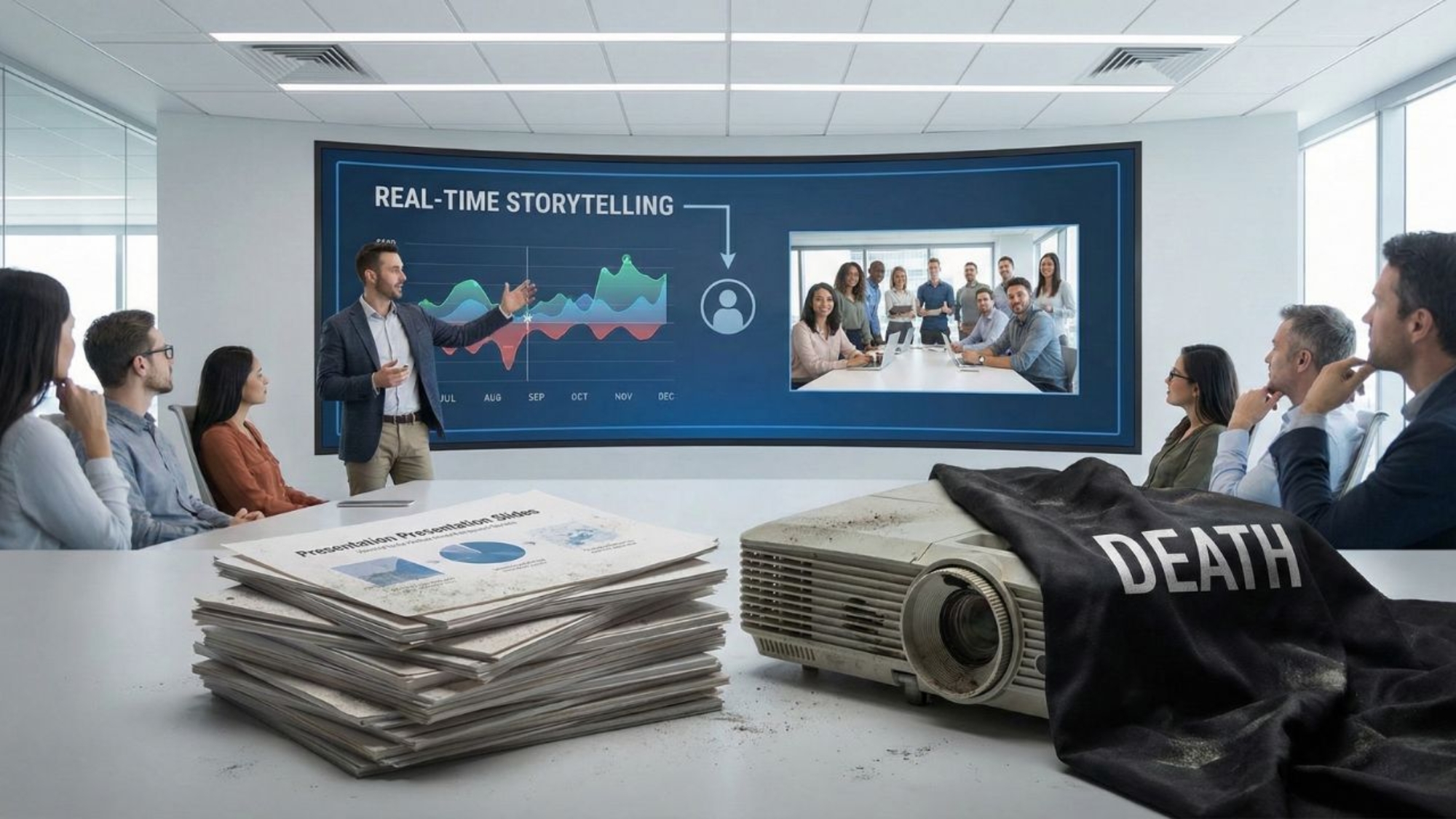
The Death of the Presentation Deck: A Case for Real-Time Storytelling

There is an exquisite irony at the heart of the modern high-end architectural practice. We design dynamic, four-dimensional spaces meant to evoke complex physiological and emotional responses—the “phenomenology of space.” Yet, when the defining moment arrives to secure the nine-figure commission to build that reality, we crush it flat. We reduce the soaring atrium and the tactile nuance of stone into a two-dimensional, linear PDF, and then proceed to read bullet points to a billionaire.

The presentation deck is not just an outdated legacy tool; it is an active saboteur of spatial awe. For the Principals of elite firms in London and Dubai, clinging to the slide deck is a strategic failure to align the sophistication of your sales process with the sophistication of your design product.

The Dilemma: The Straitjacket of Linearity

The fundamental flaw of the slide deck is its inherent rigidity. It forces a complex “spatial narrative” into a chronological straitjacket. You, as the presenter, dictate a forced march: first the site plan, then the massing diagram, then the lobby render, and finally, the penthouse view.

But high-level clients—sophisticated institutional investors or private patrons—do not think linearly. They think exploratively and skeptically.

The crisis occurs when a client interrupts slide ten to ask a critical question about a sightline relevant to slide thirty. The narrative spell is instantly broken. You are forced to stop, fumble out of presentation mode, scroll frantically past your carefully curated sequence, and apologize for the delay. In that moment, the Principal is demoted from a visionary guide to a flustered IT administrator. The deck cannot pivot, and therefore, it cannot persuade in real-time. It turns a dynamic consultation into a static lecture.

The Analysis: The Pivot to Real-Time Responsiveness

The future of elite presentation is not a better slide; it is a live simulation. We are entering the era of Real-Time Storytelling, powered by the same game engine technology (such as Unreal Engine 5) that drives the world’s most immersive entertainment.

This is the technological backbone of Digital Classicism—using advanced tools not for futuristic gimmickry, but to restore the ancient human desire for exploration and tactile discovery.

Shifting from a “deck” to a “real-time environment” fundamentally alters the power dynamic of the room:

  1. From Broadcasting to Navigating: Instead of flipping slides, the Principal stands inside a fully rendered, live digital twin. The presentation becomes a guided tour. If the client asks, “What does the light look like in the winter?” you don’t promise to send a render next week; you change the time of day and season instantly, right before their eyes.
  2. The Authority of Instant Data: Real-time allows for layering. You can move from a photorealistic view of a marble facade to an x-ray view of the structural steel mesh underneath with a single click. This demonstrates absolute command over the project’s data and “digital craftsmanship.”
  3. The Collaborative “Yes, And…”: When a client suggests an alteration in a real-time environment, you can often explore the implications immediately. The meeting shifts from a defense of a fixed idea to a collaborative co-authoring of the vision.

The Bizwity Perspective: Unleashing Intuition

At Bizwity, we recognize that the greatest asset a Principal brings to a high-stakes meeting is not the render, but their own intuition—their ability to “read the room” and pivot the narrative based on the client’s subtle reactions. The rigid slide deck handcuffs that intuition. Real-time storytelling unleashes it.

By adopting real-time tools, you are removing the friction between your vision and the client’s perception. You are no longer asking them to do the cognitive heavy lifting of imagining the future based on flat abstraction; you are inviting them to step inside it. In the “Business of Awe,” the firm that controls the reality of the meeting controls the outcome. The deck is dead; long live the experience.

Thumbnails for showcase (8)

How to Turn Your Website into a “Digital Sales Agent” That Never Sleeps

For most elite architecture and interior design firms, the website is a static digital mausoleum. It is a collection of high-resolution images of past projects, a list of awards, and an “About” page that speaks in the third person. It is beautiful, but it is silent. While the Principal is asleep in London or at a site visit in Dubai, the website sits passively, waiting for a prospect to do the heavy lifting of imagining their future project.

The dilemma for the modern Founder is that your website is likely your most underutilized asset. In an era where the “Business of Awe” is increasingly global and hyper-speed, a portfolio that just “shows” work is a liability. You need an asset that sells—one that filters prospects, builds intellectual authority, and provides a spatial experience 24/7. It is time to move from the digital brochure to the “Digital Sales Agent.”

The Dilemma: The Passive Portfolio Trap

The traditional architectural website suffers from what we call “The Passive Portfolio Trap.” It assumes that if the photography is stunning enough, the client will reach out. But high-net-worth (HNW) clients and institutional boards are looking for more than a lookbook; they are looking for a partner who can manage risk and deliver a specific “spatial narrative.”

When a potential client lands on a static site, they are met with a wall of completed work. There is no guidance, no interactive engagement, and no demonstration of the firm’s specific “digital craftsmanship.” This lack of interaction creates a “Conversion Gap.” The prospect leaves with a vague sense of your aesthetic but no understanding of your methodology or the ROI on your design. In the high-stakes world of elite commissions, a “vague sense” is a missed opportunity.

The Analysis: The Architecture of an Active Agent

To transform your site into a Digital Sales Agent, it must be architected with the same rigor you apply to a physical structure. It must move from a display of output to an invitation into a process.

A Digital Sales Agent performs three critical functions that a static portfolio cannot:

  1. Automated Authority Building: Instead of a generic contact form, the site offers “Intellectual IP”—white papers on urbanism, video deep-dives into material sourcing, or interactive guides to “experiential luxury.” It educates the client while the Principal is elsewhere, establishing the firm as the inevitable choice.
  2. Qualitative Nurturing: Through interactive elements, the site can “interview” the prospect. By the time they hit “Submit,” the site has already identified their project scope, aesthetic preferences, and timeline. This filters out “tire-kickers” and ensures the Principal only spends time on high-value leads.
  3. Immersive Pre-Visualization: In the spirit of Digital Classicism, the site should offer “Micro-Immersions.” These aren’t just galleries; they are web-based, interactive vignettes where a client can manipulate light or materials in a digital twin environment. It provides a taste of the “awe” they will receive if they hire the firm.

The Strategy: Engineering the 24/7 Conversion Engine

Turning your website into a high-performing agent requires a shift in digital strategy from decoration to utility.

  • The “Spatial Narrative” Lead Magnet: Offer a high-value digital asset in exchange for an email. Perhaps it’s “The 2026 Guide to Super-Prime Interiors in the UAE.” This captures the interest of clients who are in the “dreaming” phase but aren’t yet ready for a call.
  • Video as a Proxy for Presence: Use high-fidelity, cinematic video of the Founder explaining the why behind a specific project detail. This builds a parasocial bond, making the client feel they have already met the Principal before the first Zoom call.
  • The Interactive Fee Estimator (The Visioning Tool): While you shouldn’t list a price menu, you can offer a “Project Visioning Tool.” This allows prospects to select desired outcomes (e.g., “Atmospheric Wellness,” “Heritage Integration”) and receive a high-level strategic brief. It shifts the conversation from cost to value immediately.

The Bizwity Perspective: Scaling Your Expertise

At Bizwity, we recognize that a Principal’s time is the firm’s most limited resource. You cannot be in every initial screening call, yet your personal authority is the firm’s strongest selling point.

We help firms bridge this gap by treating the digital interface as a high-end concierge. By integrating immersive technology and strategic content automation, we turn your website into a tireless extension of your design philosophy. It doesn’t just show the “soul” of your work; it advocates for it. In the “Business of Awe,” your website shouldn’t just be a destination; it should be the most efficient closer on your payroll.