We are trained to obsess over the “objects” of architecture. We labor over the curvature of a staircase, the thickness of a marble slab, and the structural integrity of a cantilever. Yet, for the inhabitant, the most profound experiences of a building often occur not within the objects themselves, but in the spaces between them.
The “In-Between”—the corridors, the thresholds, the shadow-gaps, and the voids—is where the real story of a design lives. It is the pause between notes that makes the music. For the principals of elite firms in London and Dubai, the ability to master these voids is what separates a high-end “project” from a “spatial narrative” that commands a legacy.
The Dilemma: The Error of the Object-Centric Portfolio
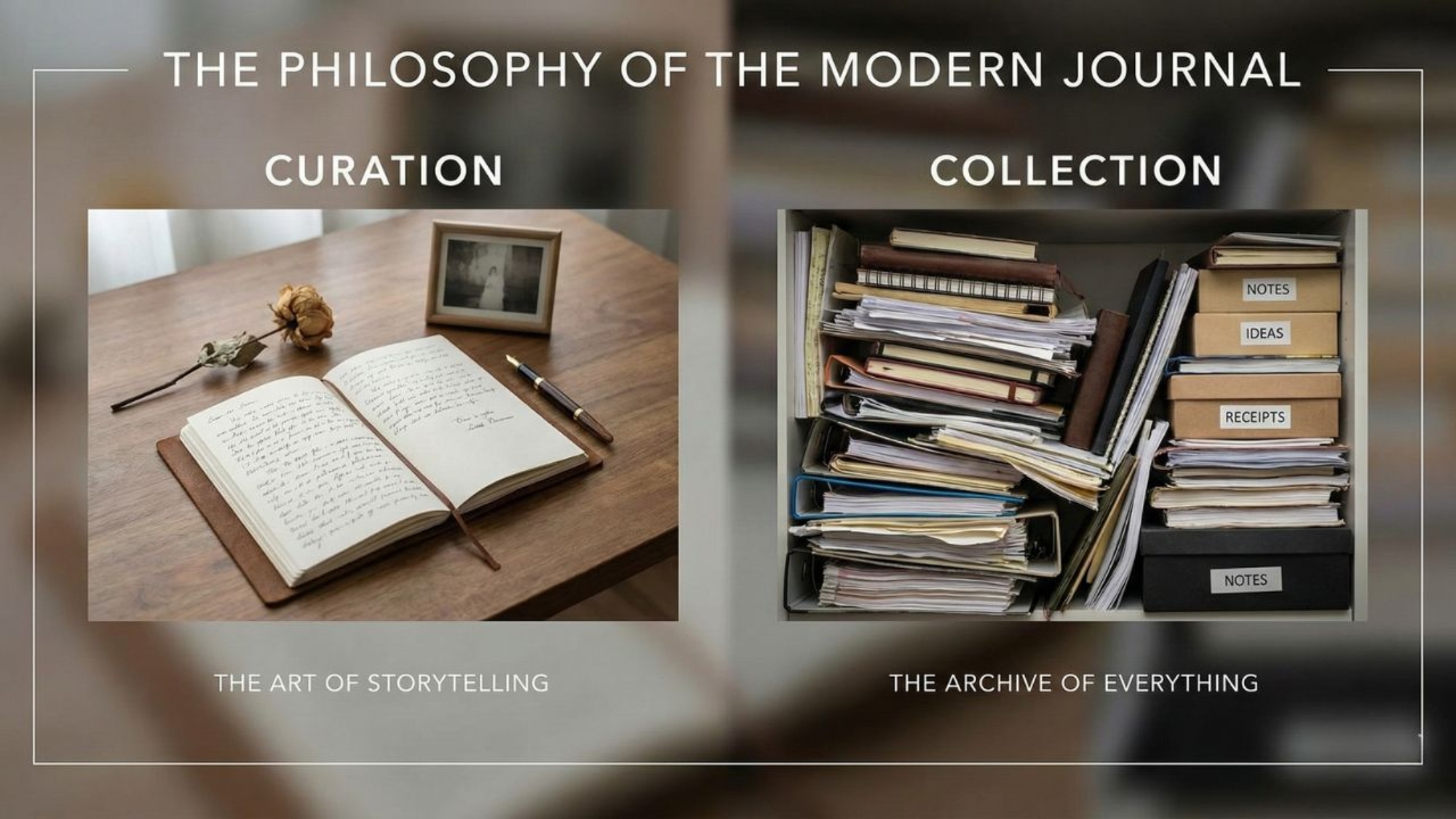
The dilemma for the modern architect is that traditional portfolios are fundamentally biased toward “things.” We photograph rooms as if they were still-life paintings. We showcase a chair in a corner or a kitchen island as a heroic centerpiece. This creates a fragmented experience for the client. They see a collection of beautiful objects, but they fail to perceive the phenomenology of the void.
When we ignore the “In-Between,” we lose the connective tissue of luxury. In elite residential and commercial design, true sophistication is found in the transition. If your digital presentation skips from the “Grand Entrance” to the “Master Suite” without acknowledging the journey through the silence of the corridor, you are failing to sell the atmosphere. You are selling the hardware, but forgetting the soul. In the Business of Awe, the void is where the emotional resonance is built.
The Analysis: The Architecture of the Void
The “In-Between” is not “empty space”; it is the medium through which light, sound, and human movement travel. In the philosophy of Digital Classicism, the void is treated with the same level of digital craftsmanship as the solid.
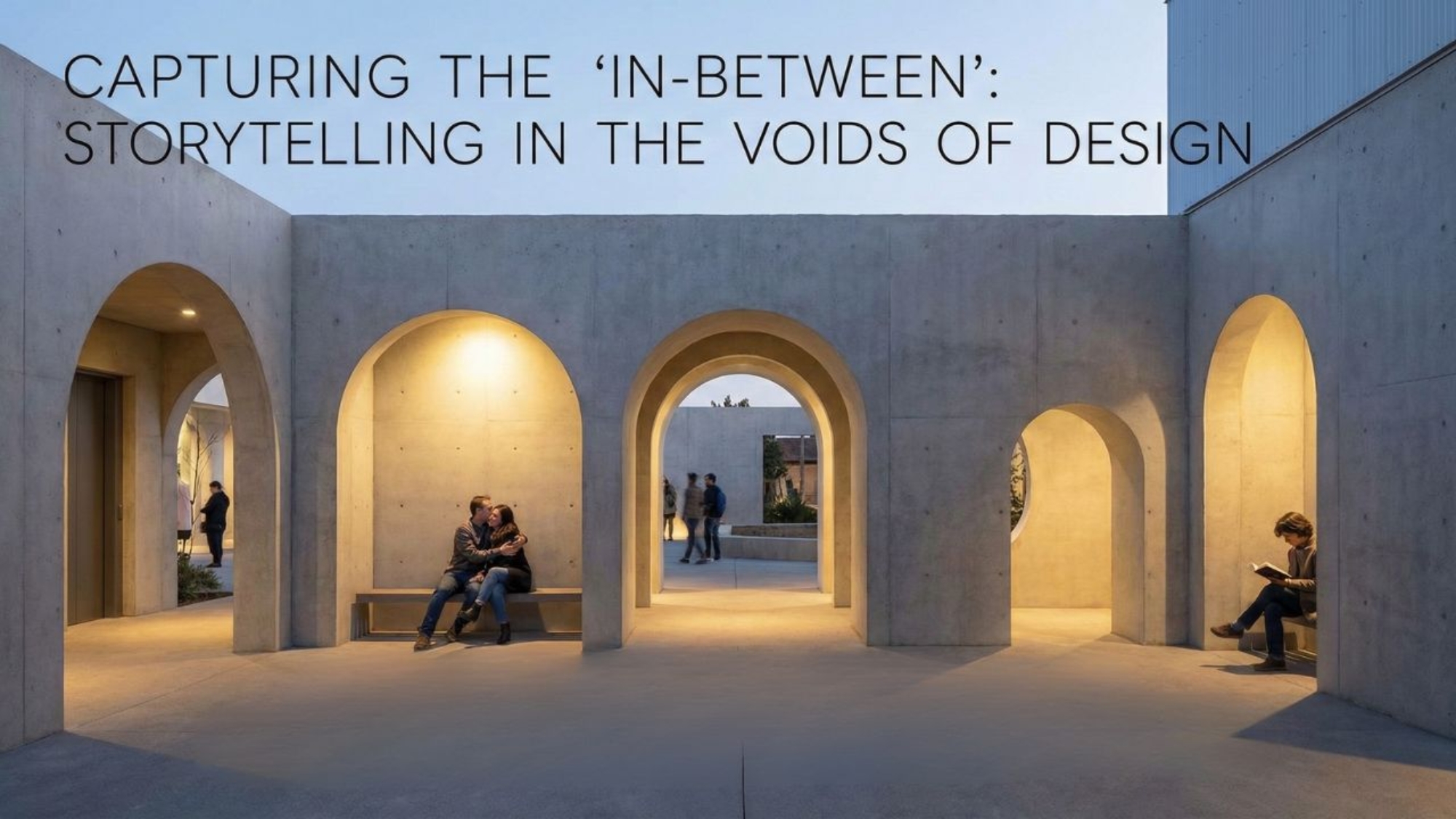
- Threshold as Narrative Shift: A threshold is more than a doorway; it is a psychological gear-change. By focusing on the “In-Between,” you can design the feeling of transition—how the air changes as one moves from a sun-drenched courtyard into a cool, concrete-walled gallery.
- The Luxury of Compression: Classical architecture understood that to appreciate a great room, one must first pass through a smaller, quieter one. This is the “spatial narrative” of tension and release.
- Shadow as Substance: In the voids, shadow becomes a material. The way a shadow falls across a recessed floor-gap or a “blind” hallway is where the mystery of a design is held.
The Strategy: Designing for the Silence
To capture the “In-Between” in your business development and design process, you must shift your lens away from the heroic and toward the subtle.
- Document the “Non-Spaces”: In your next journal entry or social feature, don’t show the living room. Show the view from the hallway looking into the living room. Frame the void. This demonstrates a level of design maturity that speaks directly to sophisticated clients.
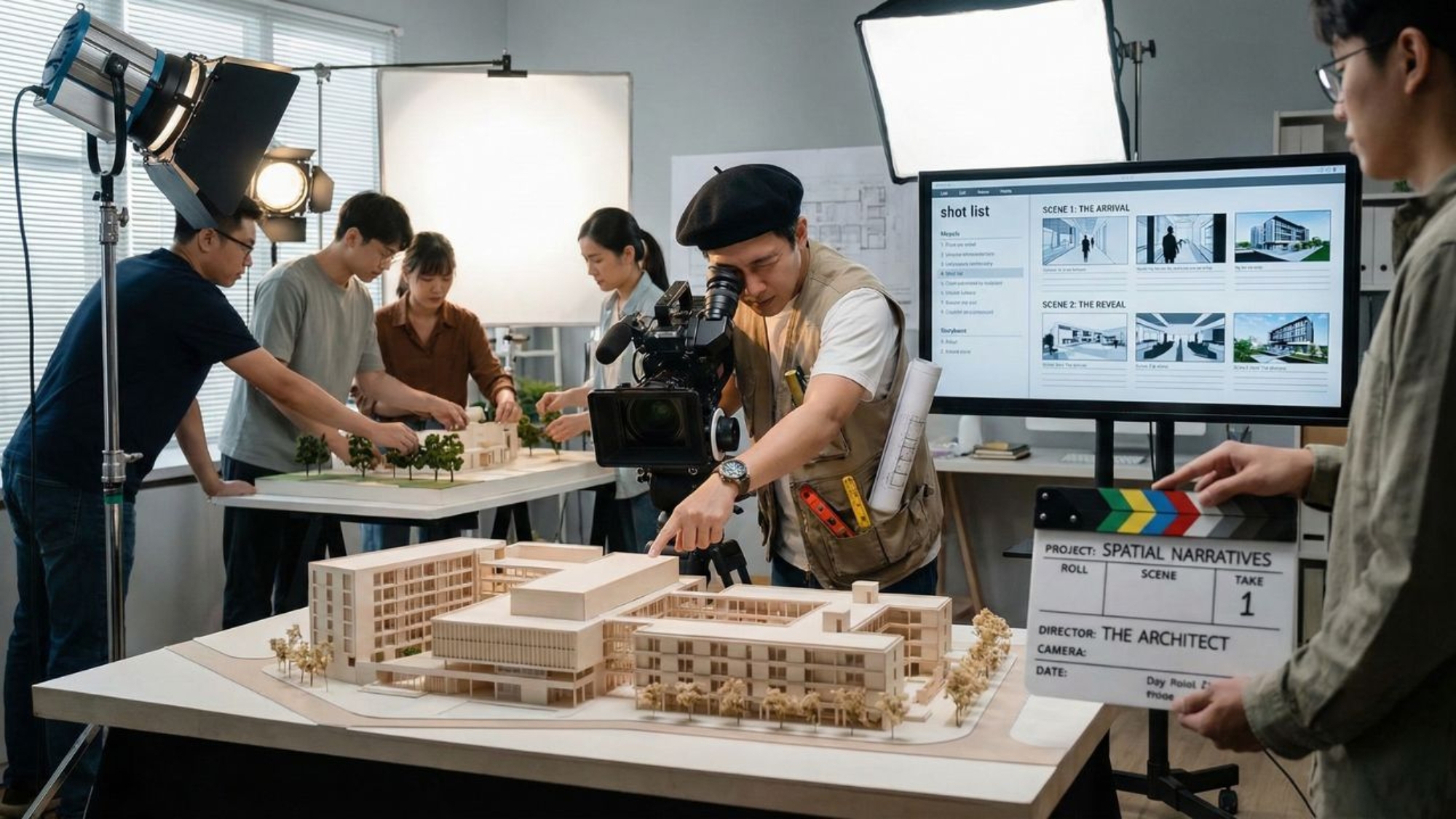
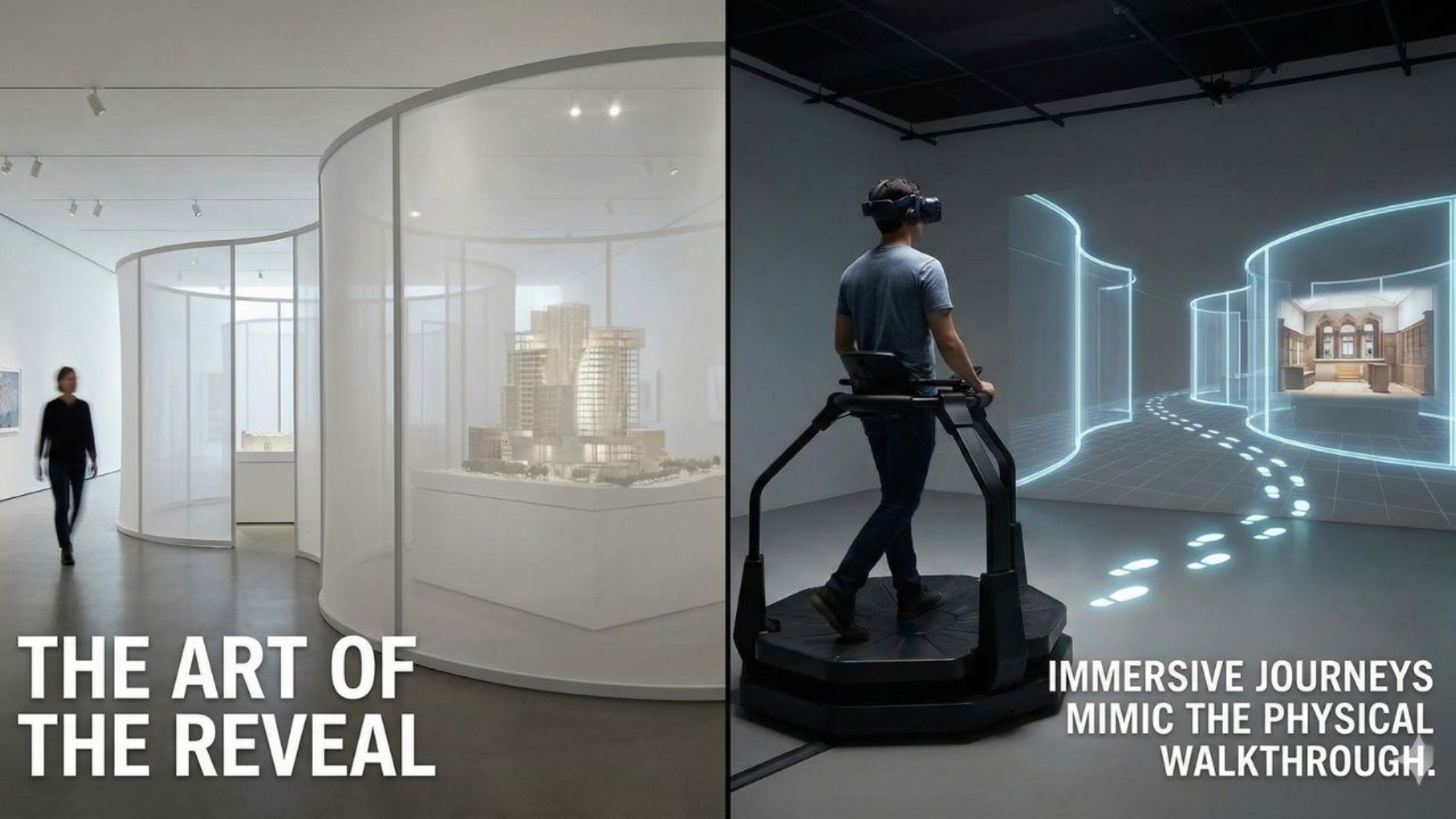
- The Pacing of the Walkthrough: Use your digital presentations to linger in the transitions. Don’t rush the client into the big “reveal.” Let them sit in the silence of the void for a moment. This builds anticipation and proves you have mastered the “haptic feedback” of the entire journey.
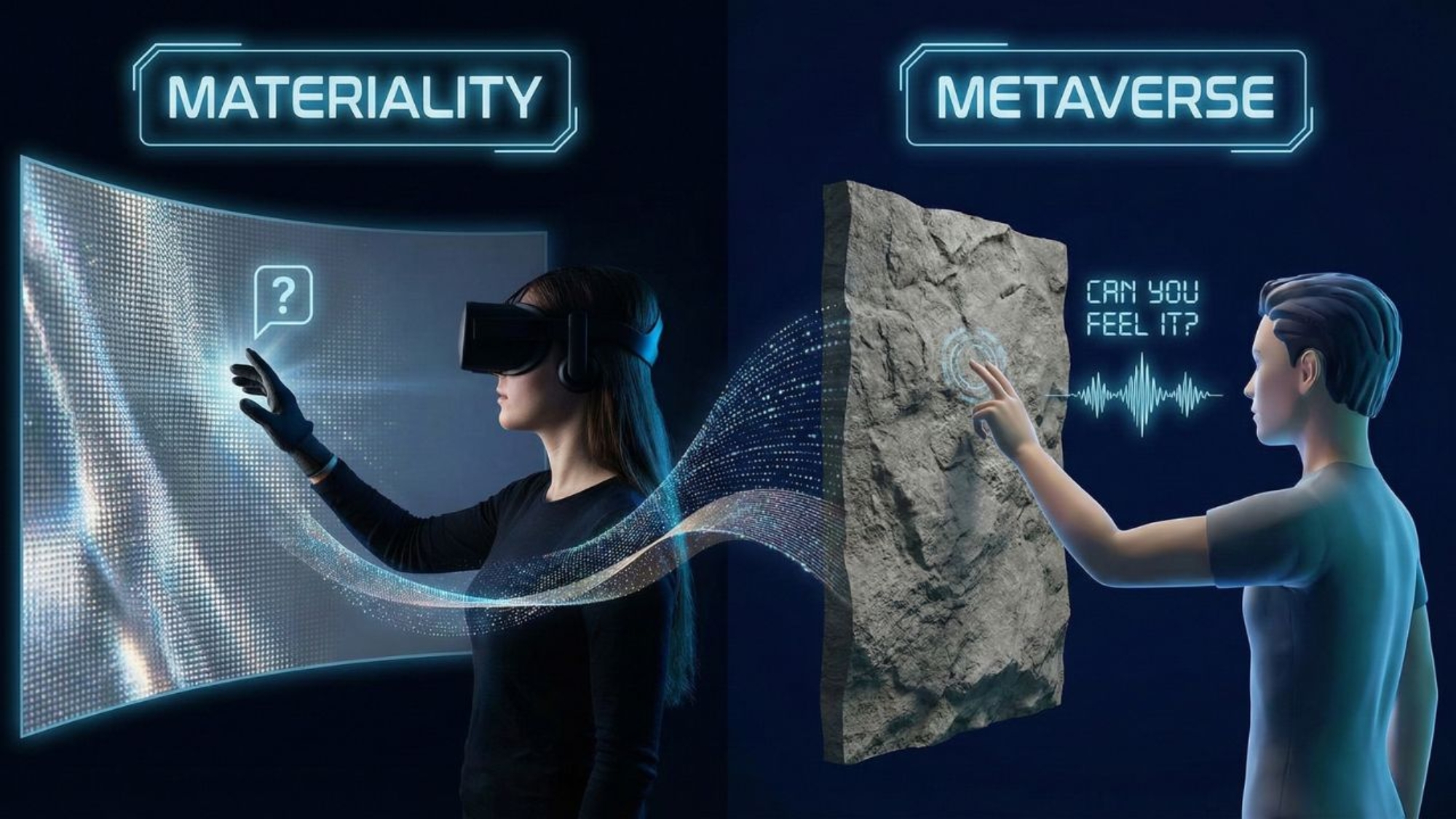
- Materialize the Void: Treat the air in your voids as a design element. Use immersive technology to simulate the specific lighting and acoustic qualities of these spaces. If a client can feel the coolness of a void in a VR environment, they will trust you with the solids.
The Bizwity Perspective: Immersive Voids
At Bizwity, we believe that the most powerful stories are often told in the whispers. Our approach to “Digital Classicism” ensures that the voids in your design are never “empty” in a digital twin.
By utilizing high-fidelity real-time rendering, we allow you to showcase the “In-Between” with the same sensory detail as your primary spaces. We capture the way light scatters in a hallway or how sound dampens in a transition zone. We don’t just help you visualize your buildings; we help you prove the value of your silences. In the Business of Awe, the firm that masters the void is the firm that creates an unbreakable human connection to their work.